Thoughts on first two weeks

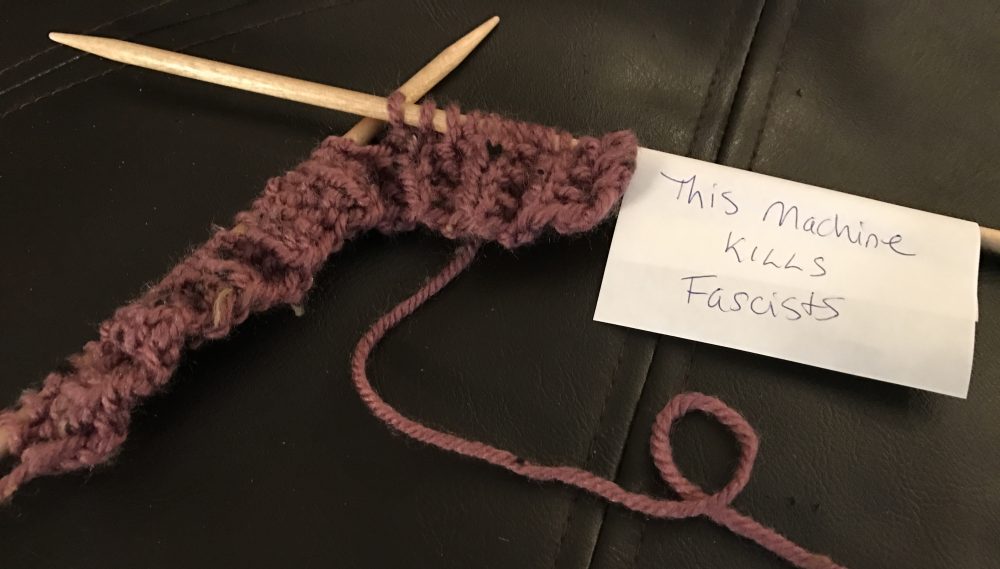
Well, it was going to be thoughts on the first week of classes, but it didn’t get done, did it? (plus, it was a short week due to the MLK holiday). I’m teaching Introduction of Women, Gender, and Sexuality Studies for the first time ever (figured I should since I’m directing the program). I’m team-teaching with a colleague in the Communication department who is a women and film expert. So far the class is going pretty well. We finally got them to open up as a class by doing an exercise “Because I am a man/woman, I can/ If I were a man/woman I could” — wasn’t hard since it involved talking about themselves! Still, it’s a huge class and it’s really hard to learn all their names. Thank goodness for Facebook . . .

In both this class, and in my U.S. Women’s History class, I started off with Laurel Thatcher Ulrich’s famous quote, “well-behaved women seldom make history.” [I used a gift certificate to buy the book of the same title and it was pretty funny reading about how the quote has appeared on t-shirts, bumper stickers, and taken on a life of it’s own. Now, what pithy quote can I come up with). Most students thought the quote was more or less true. We’re having fun in my women’s history class comparing the vilification of Victoria Woodhull, the first woman to run for president, with the media crapploa that continues to come out on Senatorella. Even though I don’t agree with everything this candidate says, I think I’m going to swallow my qualms and make history if only to show how disgusted I am with what little coverage I’ve managed to stomach. [which includes Ann Coulter’s apparent endorsement]

So, all in all, this is quite a semester to be teaching about women, gender, and politics.

More on Menstruation

Last week, there was a post on H-Sci-Med-Tech asking for colloquial terms for menstruation for a colleague who is writing a historical novel set in the mid-twentieth century. I immediately thought of Anne Frank’s reference to her “sweet secret” in her diary, as well as Judy Blume’s Are you There God, It’s Me, Margaret. One reply mentioned “my friend is here” and “fell off the roof.” I did a quick Google search and found an extensive list here. Then the Onion has a nice little top nine list. I doubt any of these are what this person is looking for, though. Maybe this is one for the guy at the Museum of Menstruation.

Protecting Futures or Promoting Profits?

I’ve decided to use my excessive TV watching for good, and comment on recent Tampax/Always advertisements touting Protecting Futures, a partnership with the United Nations Association of the USA HERO campaign. The program urges women to “use their periods for good” — saying that purchase of Tampax or Always will allow the company to donate 1.4 million dollars to provide feminine protection and education to girls in Southern Africa. According to the website, “hat money will be used to provide health, hygiene and puberty education. It’s also going into building classrooms, toilets, wash stations and dorms. And it’s being used to provide the students with meals and clean water. In addition, we’ll be providing pads to these girls to help them not miss school when they get their period.”

My quick survey of reactions to this campaign on various blogs and forums indicates there has been much criticism of this campaign — some say “yuck,” others say this is just encouraging more pollution of the environment. The most cogent (and funniest) comes from a fellow fiber-addict, Knitted Bikini, who observes “these women have had to endure missing school and much worse, and they’ve had to endure it for generation after generation. I’m glad you’re finally interested.” She adds that perhaps they should also find a product to deal with more critical issues, such as female circumcision.

To add an historian’s take on this — this reminds me of arguments made in Joan Jacobs Brumberg’s book, The Body Project, about how the menstrual hygiene product industry taught girls in the early twentieth-century United States how to menstruate the “modern” hygienic way. Menstruation then became a “hygienic crisis” rather than a female right of passage that connected women across generations. I wonder if this sort of thing will happen with the campaign in Africa. Still, the Protecting Futures seems to be promoting what Brumberg calls the “whole girl” by promoting health education and sanitary facilities in addition to plugging a product (which P&G is distributing for free). Also, at least they’re not giving out cigarettes. . .

[Further thoughts: I chatted about this with the colleague next door — she suggested seeing this as part of a larger “click for the cause” phenomenon on the Web. Also, note to self — think about how this relates to issues of “ethical consumption” raised in Landon Storrs, Civilizing Capitalism].

How to be an Author, or the Need to Advertise

Just read a column in the Careers section of this week’s Chronicle of Higher Education, entitled “How to Be an Author.” For those interested in writing the great American novel, look elsewhere. This article is how to promote your book once it’s been published. Here’s a summary of their advice and what I’ve done to follow it:

Talk to Your Publisher’s Publicity Department.

Yes, I did that and dutifully filled out the author’s questionnaire. This isn’t a trade book so I’m not expecting to get on Oprah, or even Fresh Air, although I did make the Tri-Town Post! And, my buddy Gil has booked me for the Central Authors Series on local access TV.

Make the Net Work for You.

Yup, got it on my blog — for the dozen or so folks who read it! Seriously, I also posted an announcement on several listservs and got a bunch of hearty congratulations from by friends around the country (and Canada). I did have some trepidation (like many women) about “tooting my own horn” but in reply to my reservations, received the following reply from someone on WMST-L:

Tooting your own horn can be a public service — that is why you wrote
the book — to serve an audience like the students and faculty on my
campus (and others). It’s very important to let us know that the
material is there — think of how much time and effort you took and how
little we have to pay for all your work.

The rest of the article has advice about going out and giving lectures, making your work accessible to the general public, being realistic about sales, and so forth. So, I shall endeavor to get the word out without looking like a shameless self-promoter!

Go Out and Dramatize.

Check — was on the program for the AHA, will also be appearing at the Berkshire Conference on Women’s History in the summer.

Be Seen.

This means getting gigs at universities — better call up the ones where I did my research . . .

Don’t Get Flustered, Get Coherent.

This involves handling difficult questions.  I may be able to avoid this by NOT lecturing about contraception at Catholic institutions . . .

Inscribe, Dedicate, Thank.

Check — I am always a gracious guest!

Consider Trading Your Labor for Books.

Just as long as they pay my way to the gig!

Be Realistic About Sales Potential.

My husband said the same thing — I’ll be happy if the print run isn’t remaindered!

Stay in Touch.

Our public relations folks are terrific in this regard, although it helps I’m a nudge myself.

Open Up.

Be ready to speak to nonspecialists — well, the book was written with them in mind.

Book Club: Eat, Pray, Love

This month, we read Elizabeth Gilbert‘s bestseller Eat, Pray, Love. This selection generated a lot of discussion, mainly because most in the club didn’t like it and some openly hated it. Overall, I liked it although I did find some things annoying. What I liked: Gilbert is a really entertaining, self-deprecating writer. I really identified with her resistance to family and cultural pressures to have children, something I’ve gone through myself. (even feminist friends who should know better have asked me when I’m having children — never! When one of my lesbian friends said, oh you’ll feel different when it’s your child, I told her, well how would you like it if I said you just haven’t found the right man?)

Gilbert’s writing is certainly colorful — her description of the various folks she encounters in her travels reminded me of Peter Mayle’s work. The section in Bali was probably the best part of the book since that’ where you really get a sense of these individuals as people rather than “characters.” The section on India did get a bit tedious (how many times do we need to hear how hard it is to meditate?) but they did make her seem more human.

Some things I found annoying — well, there are some clunky metaphors that made me go “oh please” (e.g. her toxic boyfriend is both her “catnip and kryptonite”) Another book club member also found the ending just a little too “perfect.” Then of course, there’s the fact that she doesn’t have to worry about money. This is an entertaining journey but not one the vast majority of unhappy thirty-somethings can take.

What people hated — one book club member gave the whole dark side of the Ashram and guru described in her story (whom she described as “guru give-me-all-your-money”). Her sister-in-law was one of her devotees and wound up spending all her mother’s savings. Another member couldn’t get very far into the Italy section, finding it just frivolous and silly. The general sense is that while we would love to have Gilbert sit down with us at dinner and tell stories, we really couldn’t understand all the hype this book has received.

Now, on to the important part — the restaurant! We tried the highly-rated new restaurant, Firebox, which is Hartford’s take on the locally-grown craze. The food is really great although a bit pricey and portions are a bit stingy compared to the super-size dishes you get elsewhere. My only complaint is the lack of parking at and near the restaurant. It’s not the best neighborhood for a woman (or man) to walk around alone.

Next month selection: Two Lives, Janet Malcolm’s biography of Gertrude Stein and Alice B. Toklas.

Press Release on my book

Well, the book is now officially out, and can be ordered here and here.

Our public relations office wrote a great press release (see below). Now, let’s hope it will appear in more than the New Britain Herald!

NEWS

from Central Connecticut State University
Honored as a “Leadership Institution” by the Association of American Colleges & Universities


Media contact: Peter Kilduff, Director of University Relations
(860) 832-1791;
Kilduff@ccsu.edu

CCSU’s Dr. Heather Munro Prescott is the author of the new book “Student Bodies – The Influence of Student Health Services in American Society and Medicine”

NEW BRITAIN — January 10, 2008 — Dr. Heather Munro Prescott, professor of history at Central Connecticut State University, is the author of the new book “Student Bodies – The Influence of Student Health Services in American Society and Medicine.”

Published by the University of Michigan Press, the book explores connections between university health centers and the evolution of American health and medicine. According to the publisher, Prescott’s book is the first to link developments in college health with larger trends in American cultural and medical history.

Dr. Prescott’s comprehensive study describes the origins and development of health services at U.S. institutions of higher education from the early 1800s –when administrators sought to restrict habits “unfavorable to study and morality” such as drunkenness, gambling, and solicitation of prostitutes — to the present, as health professionals face issues ranging from sexually transmitted diseases to depression to eating disorders.

Drawing on a variety of primary sources, Professor Prescott examines the relationship between administrative regulation of “student bodies” and broader social-cultural views about young adults and their status in 19th- and 21st-century America.

“Student Bodies” explores little-known but significant aspects of college health. They include the importance of women’s colleges in the development of student care, the use of physical entrance examinations to deny admission to those with “undesirable” bodies, the sometimes controversial handling of health concerns specific to minority and lesbian, gay, bisexual and transgender (LGBT) students, as well as the rise and fall of “in loco parentis” (Latin for “in the place of a parent”, referring to the legal responsibility of a person or organization to assume some responsibilities of a parent).

Prescott‘s book is geared toward medical scholars and college administrators, as well as anyone wishing to gain a better understanding of medical history, women’s health, and the history of college life in America. Prescott is winner of the Will Solimene Award of Excellence in Medical Communication for her previous book “A Doctor of Their Own: The History of Adolescent Medicine.”

Professor William A. Christmas of Duke University hailed Prescott’s book as “well researched, written, and referenced … [it] explores a number of areas of college health not previously covered …”

According to Professor Sarah W. Tracy of the University of Oklahoma, the book is “a worthy and important contribution to our knowledge of the history of American medicine and higher education … a pioneering effort that weaves together many different historical fields, appealing to all those interested in American medicine, public health, and education.”

Disability in the Media: Celebrities and Psychiatry

I’ve been struggling to come up with an entry for this month’s Disability Blog Carnival, the theme of which is “Disability in the Media.” In terms of psychiatric disability, this has been quite a year: first we had Owen Wilson’s attempted suicide and battle with depression. The latest, of course, is media speculation about whether or not Britney Spears has bipolar disorder. I tend to agree that these events are a mixed blessing — if they help to raise awareness and greater sensitivity towards individuals with mental illness, that would be great. Unfortunately, I think the reports on Spears are just going to reinforce the same old, same old.

Back from the AHA

Well, I’m back from the AHA and trying to get unpacked and organized (ha!) The AHA blog and History News Network both give reports on the meeting highlights. Since my session was on a contemporary event, I was disappointed that HNN decided not to cover it along with sessions on 9/11, the Iraq war, and Hurricanes Katrina and Rita, among others. [I was also bummed that the University of Michigan book display did not include my book, which is now officially out and available for purchase!] So, here’s an overview of “Secure .. for Whom? Campus Violence in Historical Perspective from the Bell Tower to Blacksburg“, without the benefit of Youtube:

First up was Kathleen Jones from Virginia Tech, who was fortunate to be out of town visiting her daughter and new granddaughter during the shootings. The title of her presentation was “The Thirty-Third Victim: Representations of Seung Hui Cho in the Aftermath of the ‘Virginia Tech Massacre.'” She focused on how media coverage shifted from presenting Cho as the “face of evil” to “symbol of mental illness” and the failure of mental health services, as well as his erasure from campus memorials, or as she called it his “public death.” Her major point was that despite the fact that this was a murder-suicide, “the issue of suicide is virtually absent in a report about protecting campuses from future deadly ‘rampages.'” She reported the alarming estimate that there are 1100 college student suicides in the U.S. each year — so far this year, there have been three at Virginia Tech alone. She concludes that while it is important to have greater openness about crime on campus, “it is equally vital to have greater openness about suicide.”

Next was Steven Mintz’ paper, “The Texas Sniper: The First Student Rampage of the Media Age,” which I’ve already commented on in an earlier post. To this I would add that he repeatedly refers to Charles Whitman as a “juvenile” even though he was in his mid-twenties and married.

In my presentation, I picked up where Steve left off and discussed developments in college mental health since the mid-1960s. I mentioned that Dana Farnsworth at Harvard criticized UT psychiatrist Maurice Dean Healy for failing to report Whitman’s thoughts about going into the tower with a deer rifle and shooting up the place to campus authorities. As promised, I mentioned Szasz’ critique of college psychiatrists, referring to them as “double agents” who pledged to serve both students and the administration, “but owing real loyalty to neither.” I focused on students’ demands for rights to privacy in mental health care, which culminated in passage of the U.S. Family Educational and Privacy Act of 1974. I concluded by arguing that discussions of security needed to include providing a welcoming environment for individuals with psychiatric diagnoses, and cautioned against the kind of profiling that followed 9/11.

The session ended with Roger Lane who gave some “Thoughts on School Shootings.” Like Jones, Lane suggested that school shootings are “in fact forms of suicide.” He also criticized Steve for offering ex-post facto diagnosis of Whitman. Although his talk was funny and somewhat irreverent (he referred to his suspicions about “shrinks as finks”) he ended on a rather pessimistic note, stating that he didn’t expect any solutions in his lifetime. He mentioned that Haverford has 13 deans and nine counselors — something that our counseling service, with only 2 fulltime counselors for 12,000 students, would envy.

Attendance for the session was rather low — about 12-15 people wandered in and out — and questions centered around safety issues like, what do you do with students who make concrete threats of violence to specific individuals. It seems to me that this is a no-brainer — but apparently some campuses don’t kick students out for saying they are going to get their guns and blow away their professors!

The good news is that the Marlie Wasserman from Rutgers University Press attended the session, said that Kathleen and my papers were the most compelling (yay!) and said she is interested in having us put together a collection of essays on the subject of campus violence. So, all in all, this was a success.

Happy New Year, getting ready for AHA

Happy New Year folks! I’m getting ready to go to the American Historical Association meeting tomorrow. I plan to stop in at the Library of Congress to look at some finding aids to plan a future extended visit, then off the the sessions in the afternoon. Found an interesting article related to my presentation at Scholars and Rogues, which comments on the incident at UC Boulder last Fall.

On that note, the folks at UCB decided to go with another speaker — Joseph Silva, who is a psychologist with the Student Disability Center at UC Davis. He looks more appropriate anyway — i.e. someone who works directly with students with mental illness and is more involved with student disability issues and rights than I am at this point. Here’s an article on him.

Book Club: Run

This month’s book club was our annual holiday outing to Grants Restaurant in West Hartford. Although the place is really too loud to have a good discussion, especially this time of year, their desserts are so great it’s worth it!

Oh, yes, the book. This month we read Ann Patchett’s latest novel, Run. I was looking forward to reading this since I’ve loved her other books. I was not disappointed, although this is more sparely written than her other books. Although the set up for the plot seemed a bit contrived, and the sequence with the ghost just didn’t make sense, overall the interaction between the characters and the trajectory of the novel worked for me. Doyle naming his two adopted sons after Tip O’Neill and Teddy Kennedy, while silly, also reveals his desperation to fulfill his failed political aspirations through his son. Interestingly enough, the others in book group who enjoyed the book, like me, do not have children. The two members with (grown) children found the relationships between parents and children unbelievable and annoying. Wonder if this is a pattern among other readers.