Blogging Against Disabilism Day this Friday, May 1

Blogging Against Disablism Day, May 1st 2008

This is really more a reminder to myself to have something ready to post on Friday. Still, I thought I’d give you all a heads up. More details about this can be found at Diary of a Goldfish.

Now that the day is here, I have something to post! This is a comment on the Inside Higher Ed article,”One Year Later,” on the Virginia Tech shootings. The article itself was okay, although as usual the discussion centered around gun laws, not the rights of mentally ill persons to adequate treatment. The disabilism was very apparent in the comments though. The first comment, from Clayton Cramer, concluded

“Deinstitutionalization was one of the major mistakes of the 1960s and 1970s. The mentally ill are paying the price for it today, and so is the rest of our society.”

Of course, this fellow opposes gun control (and supports home schooling, and criticizes affirmative action. citizens of Idaho — do not vote for him!) So, his solution is to lock all the “crazies” away — oh wait, we’re already doing that at least according to what my colleagues in criminal justice say about the high rates of mentally ill persons in prison.

Rod Bell, Adjunct Professor at College of DuPage, said something similar, blaming this all on the hippies in the sixties who revolted against authority. Sheesh, I hope this guy isn’t an adjunct professor of history. This is just a sloppy historical analysis that would get an “F” in any of my classes. For the record, dude, it was John F. Kennedy, not the hippies, who initiated the move away from warehousing the mentally ill in asylums in favor of community-centered mental health. Also, exposes of the hideous conditions inside psychiatric hospitals were made by WWII conscientious objectors, i.e. long before Ken Kesey’s novel.

Added later:  In reply to Mr. Cramer’s comments, I would say first that my point is that it is indeed simplistic to attribute the current mental health crisis solely to the anti-psychiatry movement and/or the anti-authoritarian impulses of the 1960s (whatever is meant by that — a subject for another post). As Gerald Grob and Howard H. Goldman observe in their recent book, The Dilemma of Federal Mental Health Policy, the move from mental hospitals to a community-based system of mental health care delivery was the product of a broad coalition of mental health experts, patients and their advocates, and politicians such as President Kennedy among many others.  The complexity of this movement, I think, gets lost because of the fame of Ken Kesey’s book and the academy-award winning film that was made from it, as well as the notoriety of Thomas Szasz’s work (for the record, I have multiple problems with Szasz, but that too is a subject for another post).

The reason the Community Mental Health programs initiated in the 1960s failed is not because they emptied the hospitals, but because there was never enough funding to meet the need for services.   We have millions of uninsured individuals in this country, and many insurance plans do not offer mental health parity.  Although the state of Connecticut mandates this for all health plans, the new Charter Oak Health plan proposed by our Governor to cover uninsured adults excludes mental health parity because it is too costly. A bill (HB 5617) has been proposed to solve this problem.

I could go on and on, but I do have to get ready for class, where we will look at all those crazy feminists who messed things up for the rest of America by asking for the radical notion that women be treated like human beings.
Angela Davis at CCSU

This has been an exciting and busy week for Knitting Clio — including a trip to Philadelphia to present a paper at the Third Annual History of Women’s Health Conference at Pennsylvania Hospital in Philadelphia. This gave me the opportunity to stay with my buddy Janet, and also engage in some friendly political sparring regarding the primary (she’s an Obama supporter but also a realistic one — i.e. she doesn’t think he’s a savior). I was polite enough to do my victory dance during Hillary’s Today Show interview while she and her husband were still asleep!

The highpoint of course was Angela Davis’ visit — and because she gave two lectures, both during my class meeting times, I didn’t have to prepare anything! 😉 Her first talk was based on her book, Are Prisons Obsolete. Her key point is that the prison, aka the penitentiary, was the product of a particular historical moment — i.e. the Enlightenment — and was created as a humane alternative to nasty and gruesome forms of punishment such as whipping, flaying alive, drawing and quartering, and so forth. [at this point I think she could have made a nod to Michel Foucault’s work, Discipline and Punish, but I guess she figured her audience would not get the reference.] She did, however, say that the prison was a “democratic” form of punishment in that in deprives a person of key features of democracy — i.e. liberty, civil rights, etc. She also said that the prison is a sign that the 13th amendment did not fully abolish slavery, i.e. the enslavement of the incarcerated population is allowed under this amendment. She was clear that she does not mean that there are not individuals who commit crimes, but she also wanted to focus on changing larger social and economic conditions — e.g. poverty, inequality, homelessness, lack of health care, etc. — that make certain individuals the target of the criminal justice system. [here she did briefly mention the problem of mentally ill persons in prison, although she also made what I considered an overly flippant comment about using drugs to control criminal behavior, but perhaps I misunderstood].

Her second talk of the day, which I found more useful for my teaching, was on gender, race, and class. This fit perfectly with my U.S. women’s history course, since we had just viewed Standing on My Sisters Shoulders, an outstanding documentary about key women involved the Civil Rights movement in Mississippi. Davis made some excellent points about historical memory, asking why is it that we remember the male leaders, but don’t remember the women who created the communities of resistance and did all the organizing to make the movement a success? One of my favorite lines from her talk was, “without Fanny Lou Hamer, there would have been no Barack Obama.” Right on, sister! She traced this selective historical memory to the American habit of hyper-individualism, which focuses on inspirational leaders and ignores the communities who prepare the ground.

During and question and answer period, an African-American gentleman asked her what she thought about the fact that Obama was poised to fulfill the American dream for African-Americans. Davis’ answer was that we’re still assuming that one white woman can stand for all women, and that one black male can stand for all African-Americans, and alluded to a classic anthology on black feminism. She pointed out that Obama is a politician within the existing two-party system, that he really isn’t all that progressive, and like my buddy Janet, said we have to get beyond our Messiah complex and focus on communities pushing for social change.

All in all, I was rather impressed with her modesty — especially her tribute to her mother, whom she described as a “model activist” and a symbol of how anyone can be an agent of social change. Awesome!

Taking the Piss?

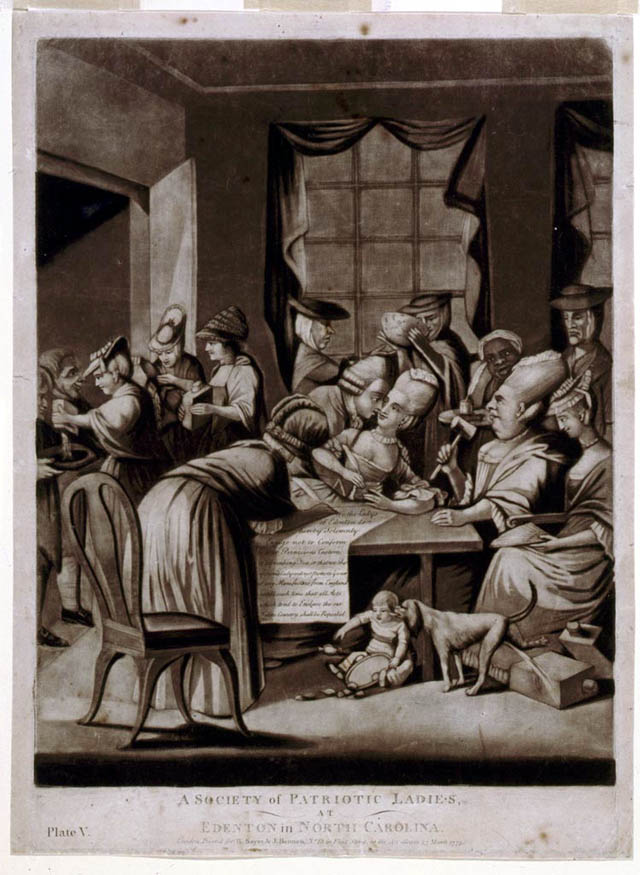
Hi again folks.  Ortho over at Baudrillard’s Bastard has asked for help with the question, what’s with all the pissing dogs in various pro/anti Revolution images from the late 18th century.  I’ve used the engraving above several times in classes, but never noticed the dog was peeing.  Not being a colonial historian, my only guess is that this is a reference to the English slang term “taking the piss.”  Anyone else have any ideas?

Meanwhile this thread reminds me I have to go walk my doggie. . .

Sad Anniversary

Today is the one year anniversary of the murder-suicide at Virginia Tech, so I thought I’d write something even though it’s been a long day. According to an article in last week’s Chronicle of Higher Education, the main actions by Virginia governor Timothy Kaine have been to weaken privacy rights of individuals with mental illness, e.g. notify parents if a student has received treatment, and allow both public and private colleges to obtain records of mental health treatment from any other school the student has attended. Hopefully these records will only be used to help students, but somehow I doubt that this will lead to better care for the students in question, especially since this is an unfunded mandate like so many others. The round up of articles in today’s Chronicle doesn’t seem to address this issue — maybe I’ll write something when I have more time.

Meanwhile, my article giving a historical perspective on all this got accepted by the Harvard Review of Psychiatry and will be appearing soon. Also my former adviser and buddy Joan Jacobs Brumberg decided to hand over editing the collected volume on campus violence for Rutgers to me. She says that the main change at Cornell is there are now sirens on all the buildings. Now if they could just reduce the waiting time to get an appointment at the Counseling Service. . .

P.S.  Here is a really awesome way to commemorate April 16.  Reminds of me the “die-in” organized Women Strike for Peace after Nixon authorized bombing Cambodia.

AAHM continued

I’m slowly getting caught up on all the stuff (i.e. student papers) that accumulated while I was at the conference, so now have a bit of time to write about the AAHM meeting. Today’s entry is on the women historian’s breakfast. We started off with a presenation by John Erlen on the European Union Library/Archives at the Hillman Library at the University of Pittsburgh. This looks like a pretty neat, albeit immense source. There appears to be loads of materials on health related topics. The only question is — how to get at what you want? There appears to be no collection guide (or really much information on the library website). The contact person is Dr. Phil Wilkin, pwilkin@pitt.edu

Monica Green suggested setting up a mentoring network, similar to those organized by other professional organizations to which she belongs.

We then did our usual round of introductions, celebrations of accomplishments, consoling for trials and tribulations. I wasn’t able to write them all down fast enough, so readers, please send them to this blog! My main accomplishment is of course the book, which you can order at a discount from the publisher:

I couldn’t attach the flyer, so here’s the discount info:

SPECIAL ONLINE DISCOUNT – sign up at www.press.umich.edu before 6/15/08 for your copy at 20% off list price. Enter code prescott08flyer

AAHM: Day One

Well, I’m here at the AAHM meeting in Rochester, NY taking a bit of a break from sessions to write something about the first full day of events. I drove here yesterday, hoping to get here in time for the Sigerist Circle panel at 2pm. Unfortunately, I miscalculated (took 6 hours not five!) so missed nearly all of it. From what I heard it was a great session. If anyone reads this and wants to comment, please do so here!

Last night was the opening reception and the sponsors were really generous with the food — including lots of shrimp, oysters, and crab. Stuffed myself as usual. I tried to listen to the opening plenary session on Mind Body Medicine by Anne Harrington. Unfortunately, I was too tired from the driving, and had too much wine at the reception, to focus on the lecture so left after only about 10-15 minutes. What I heard seemed pretty good but rather general for this audience.

This morning’s opening address by John Parascandola was excellelnt. He talked about Rapid Treatment Centers for women infected with VD during WWII. This is part of his forthcoming book on the history of syphilis that will be coming out in the summer. These centers were set up to protect American servicemen from women with “loose morals.” Women with VD were sent to these center for accelerated treatment with Salvarsan, based on the belief that they were unreliable patients who would not complete the full course of treatment to render them non-infectious. It was also interesting to learn that all women who traveled alone were considered suspect — for example, a married woman on her way home from work as a waitress (itself a suspect occupation) was stopped and tested for VD because she ate in a restaurant by herself. I’ll certainly be talking about this anti-VD campaign that targeted women as disease-carriers in my women’s history class next week.

I checked out the book exhibit briefly and once again Michigan has not sent my book for the display! On the other hand, I have a radio gig with an NPR station at the University of Illinois. It’s not syndicated, but you can listen on the web and get it at on a podcast.

Good Cause, Bad Idea for Fundraiser

Earlier today, our police department announced it was working with one of our fraternites (Phi Delta Theta) on a “Jail n Bail” Fundraiser for the Special Olympics. Now, I’m all for good causes, but like other faculty members, I thought the method of fundraising was rather tasteless. I cracked that at least this was better than the “senior slave auctions” we had in high school, although not much. Another colleague, one of my CCM members, commented on how this is similar to using Indian mascots — i.e. not good. Others raised issues about racism in the criminal justice system. Then we had a dismissive faculty member who just told us we were taking ourselves too seriously and said we were just biased liberals who need to get a clue.

I gave up at that point, but should have mentioned that there are a significant number of individuals with cognitive disabilities in the criminal justice system, mainly because there aren’t enough services in the community.

Also, I have some ambivalence about Special Olympics — certainly it’s nice to encourage physical fitness and I do think the event raises disability awareness, but doesn’t really do much to address vast inequities in care available to children and adolescents with special needs. Our state would rather place a child in an institution than give parents assistance with basic medical care and other needs.

Ewephoric Knitters Weekend

This past weekend I attended a knitters retreat sponsored by Marji’s Yarncrafts in Granby. I’ve been going to this event for several years and have to say that I enjoy it a lot more than when it was sponsored by the now closed Wool Connection in Avon. Saturday, I took a class on Celtic Cables with Melissa Leapman who is a really awesome and funny teacher. On Sunday, I took a class on borders and finishing techniques with Candace Strick, who is also really helpful and patient.

The best part of the weekend, though, was not the classes themselves but the jokes that Candace told during the breaks in between classes. The funniest were a collection of Gentile jokes which I’d never heard before, and being a goy, found absolutely hilarious and dead-on.

Something else I learned about that is really cool is a crochet coral reef project created by the Institute of Figuring in New York. Apparently, this is a touring exhibit that includes workshops on how to crochet similar sculptures. Next stop the Wadsworth or NBMAA?
