Book Club: The Brief Wondrous Life of Oscar Wao

It’s been a busy week, so I’m a week late in writing up the latest book club selection, The Brief Wondrous Life of Oscar Wao by Junot Diaz. Despite the fact that I know almost no Spanish, I did not find the frequent passages in that language to be distracting — like Michael Chabon’s book, this simply made the voice seem more authentic. Choosing to make Oscar an overweight, D&D playing, nerdy budding sci-fi writer was a great choice (speaking of busting stereotypes about Latino males). Although I wish more time had been spent on Oscar, the multiple stories of the various family members were fascinating and compelling. As with just about any novel we read that’s set outside of North America, I feel a need to get up to speed on the history and geography of the region (at least I can find the DR on a map, I think).

One club member did find the profanity and frequent use of the N-word off-putting (she is Jamaican of English descent). I think Diaz is able to get away with it but I do see how some readers would find it a turn-off.

Finally — the meal. Instead of our usual trip to a local restaurant, Jill cooked us a great brunch at her home using her great collection of fine china (“finer things” club indeed!)

Student Suicide Attempt at CCSU

Yesterday, a first-year student allegedly attempted to take her own life by jumping off one of the parking garages (see story in this morning’s New Britain Herald)

There is already a Facebook group (“don’t give up, Cherolle Brown”). I also noticed that there is a support group sponsored by NAMI-CT for students with diagnosed mental disorders. Perhaps it’s also time to do some broader awareness and start a chapter of Active Minds?

At any rate, I plan to speak about my experience as a former client of the Institute of Living (my bipolar friend jokingly refers to it as “the substitute for living”) Professional’s Program in the hopes that it will do some good!

Speaking of IOL — I like it that they are sponsoring a BrainDance competition for high school students to reduce stigma, but their Myths, Minds, and Medicine exhibit is overly simplistic. The library also is not very helpful in answering reference questions.

Gig at AHAP

Just returned yesterday from a trip to Akron, Ohio to give a talk at the Archives of the History of American Psychology. The folks there were very friendly and helpful. The talk was a big hit as well. I was a bit nervous because most of those who attended my Cheiron session last summer didn’t seem to get be that interested in clinical issues, and completely missed the point of the disability perspective (John Burnham, for example, said he agreed with most of it but said the seriously mentally ill should really be locked up for their own good — okay he was a bit more tactful than that but it was the general drift).

Most of the audience members at AHAP were graduate students and faculty in counseling or clinical psychology. Some of the most intriguing questions were from a fellow named Fred Frese, who is a clinical professor of psychology at Case Western who is also a recovering schizophrenic and advocate for other mentally ill individuals. He introduced himself right before my talk, which gave me the courage to “come out” right away as a person with bipolar disorder. He suggested looking at the Association on Higher Education and Disability which has a special interest group on psychiatric disability. He also mentioned attempts to reform the Javits-Wagner-O’Day act to include mental illness (originally this legislation was created in 1930s to assist the blind, then was extended to physically disabled in 1970s). As Frese put it, mentally ill individuals want to be on the bus, even if it’s at the back. He asked if I was willing to work for this, to which I said “absolutely!”

Other things to look into: Andrew Sperling, legal counsel at NAMI,
Tony Young, Senior Public Policy Analyst at NISH, decriminalizing mental illness (apparently the LA county jail is one of the largest psychiatric facilities in the country by default!)

Threat Assessment/Your right to know?

Have you seen this guy? This “right to know” police alert came through our email this week. My students in the disability history seminar had some interesting things to say, including, what about this guy’s right to come back to campus and not be treated like a pariah?!

In addition, our campus invited a threat assessment expert to campus. I wasn’t able to attend but reading her publications indicates she warns against “profiling.” Still it is clearly not a disability perspective.

Disability and Diversity

My buddy Penny Richards from Disability Studies gave my name to the folks at Disability Services at University of Colorado, Boulder, as a possible speaker for a Diversity Summit in February. Their interest in including disability as diversity category grew out of an incident at UCB earlier this year, involving a food service worker who had been placed through Chinook Clubhouse, a vocational and rehabilitation center for adults with mental illness. After the suspect stabbed a student, all other employees who had been placed through this center were put on administrative leave, with pay, pending background checks. So, what Disability Services would like to do have someone with “excellent speaking skills” (hopefully me!) give a talk “to engage an audience of faculty, staff, and students, as well as people from outside the campus, interested in disability concerns on the following:

1) the negative social and psychological effects upon the community of persons with disabilities when violence occurs on campus; especially, when the perpetrator is identified as a person with a disability;

2) the importance of disability awareness for decision making authorities responding both internally and externally when violence on campus occurs;

3) defining how differing populations within the college’s or university’s disability population are affected by outbreaks of violence; and

4) outlining best practices for making university communities of disability more welcoming in the aftermath of such crises.”

One of their main points is that disability is an underrepresented category when it comes to discussions of diversity — reminds me of my own campus!

Some ideas we came up with through a telephone brainstorming session:

  • history of social attitudes towards persons with disabilities
  • “outing” individuals with nonvisible disabilities — links to GLBT history
  • individual privacy vs. security — stigmatizing minority to protect the normative majority
  • connections with other forms of medical surveillance past and present
  • no direct correlation, only media perception, about connection between violence and mental illness — in fact, incidence of violence higher among general population, mentally ill individuals are more likely to be victims of violence
  • traditional focus on mental health services tends to privilege the clinical/medical model which empowers medical professionals, whereas disability studies and disability services empowers individuals with disabilities themselves — administration at UCB favors MHS perspective, campus “safety” while failing to consider disability perspective
  • Disability services a place for individuals with disabilities to normalize identity, much like Women’s Center, GLBT centers, etc.
  • connections to discrimination against Arab Americans after 9/11, South Korean Americans after Virginia Tech (on that note, the Chronicle and other mainstream media been silent about shame/stigma imposed on those with mental illness).
  • implications for those who share diagnosis with the suspect — reluctance to disclose identity because of “guilt by association” — mis perception that those with mental illness are not safe to be around
  • how to reduce shame/stigma — see those with mental illness as part of community, not “safety problems”
  • English professors being asked to look out for “disturbing writing” by students

More thoughts on this later — seems to me we should do something similar here at CCSU.


Book Club: Loving Frank

This month’s book club selection was Loving Frank by Nancy Horan. The book is a fictionalized version of Frank Lloyd Wright’s relationship with Mamah Borthwick. [if you don’t know the story, don’t go to the Wikipedia entry — it spoiled some of the book for me] I was unfamiliar with this story despite being a U.S. women’s historian. Overall I thought the book was a great read. She does an excellent job of capturing the period without being boring. Mamah is a compelling character — Horan is able to present the dilemmas women of her generation faced. At the same time, Mamah’s attempts to find her own voice and negotiate romance and motherhood have a lot of relevance for today’s women.

I also learned some new things, especially about Ellen Key — I was only familiar with her book, The Century of the Child, not her feminist writings. I wonder if Key was as much of a jerk as she comes across in this book!

There were a few things I didn’t like — some parts dragged a bit, especially the parts with Key who again does not come across as very likable or even all that interesting. The ending is also rather abrupt (won’t spoil it here). I would have liked to have more material on Mamah’s relationship with her sisters and best friend (in fact the material on college women and the problem of “after college, what” was the most interesting part of the book for me).

A book club entry would not be complete without a review of the restaurant — Masala Indian Bar & Restaurant, onMain Street (where Low Country used to be). This has to be the best Indian food I’ve ever had (of course I’ve never been to India). It’s a bit pricey, but the preparation and presentation are well worth it. Subtle flavors, not as greasy as what you typically get. Will definitely go back, although will try to find a place to park near the Atheneum since the valet parking is quite expensive!

New Blog Name

Hi folks(or rather the handful of family/friends who read this thing!),

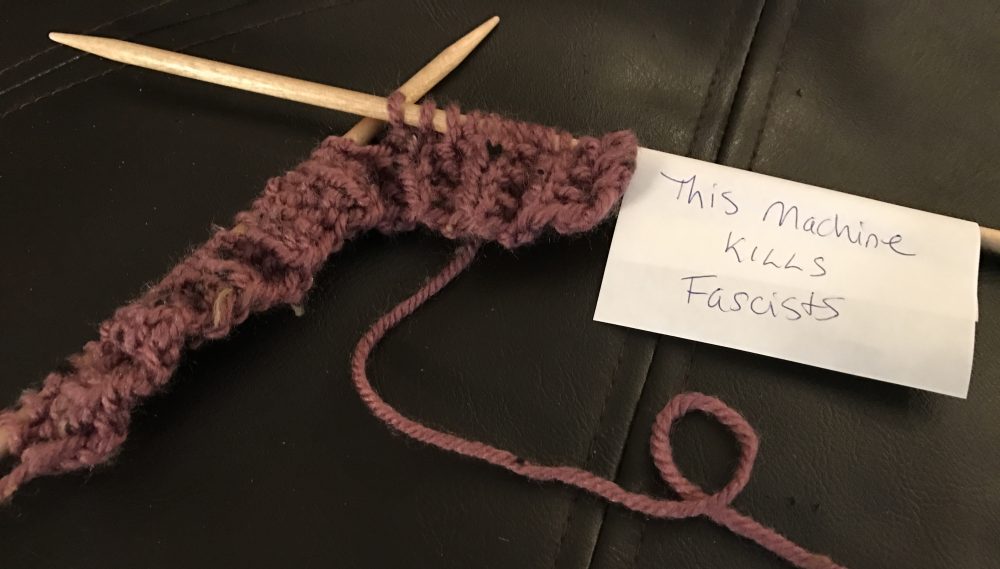
I’ve decided that since this blog is about more than medical history (and very few of my posts are about medical history), to make a name change that more fully reflects the posts on this site. It’s also a take on the conservative history/current events blog,  Spinning Clio.

Most importantly, as you can see from my many posts on the subject, I just plain like to knit! It’s a way to relieve stress, especially during long meetings of Faculty Senate and AAUP.

The Book Cover

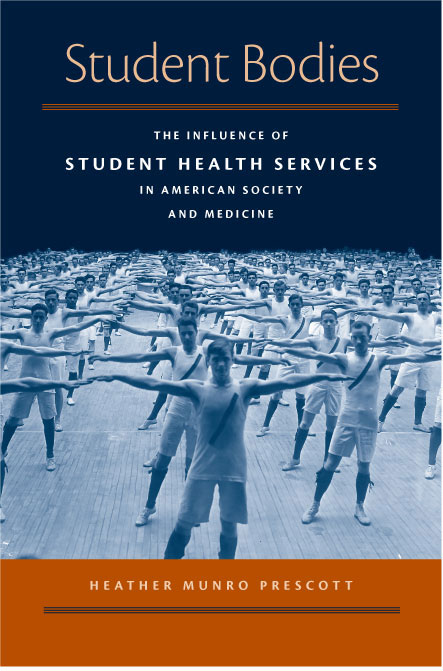
Just received news that my book is now off the printer and will be out within the next 5-6 weeks. Meanwhile, here’s the book cover.

prescott_front.jpg

I thought it came out really well — certainly is eye-catching.  Hopefully this one will sell!

Things have been extremely frantic around the U the past month and a half, as our campus newspaper has once again decided to be offend as many people as possible. Don’t believe me, take a look

This have course has raised a complete uproar again over free speech, responsible journalism, and so forth.