Common Sense Can’t be Digitized: My Students’ Thoughts on the #ccsulockdown

Earlier this week, my campus was under lockdown because of reports of a shooter on campus.  Fortunately, it turned out to be just a student coming back from a long weekend of partying at the flagship campus to the northeast of us still wearing his Snake Eyes costume, which included an air pistol that looked like an automatic handgun. My university has an emergency notification system (ENS) that blares sirens and sends out automated phone class and emails.  I was at a medical appointment off-campus while this was going on so my experience of the event came through these messages, as well as the local news and my colleagues updates on Facebook and Twitter. Since the suspect is African, some of my colleagues were concerned that this was an incident of racial profiling. Others think that the campus and New Britain police overreacted and this is a sign of our security state out of control (“Giuliani time at CCSU” is how one colleague put it).  Many are understandably infuriated that one student’s poor judgment caused three hours of terror and shut the campus down for the remainder of the day and evening.  All of us are glad that no one was injured or killed.

During my undergraduate digital history class this afternoon, I ditched the scheduled readings in favor of a discussion of this incident and how it relates to what we’re learning about digital communications. Here’s a summary of their comments:

When the sirens went off, many students didn’t know what they were for.  Others couldn’t hear them because they were in basement classrooms or other locations that were out of range.

Some faculty seemed unprepared as to what to do.  One professor answered a knock on the classroom door without checking to see who it was (the custodian as it turned out), Another left his classroom to go teach another class (which wasn’t there because everyone was under lockdown!).

There were no telephone calls or emails from the ENS until half an hour into the lockdown.  One student arrived on campus after the lockdown was announced, parked his car, and started to walk to class before he found out what was going on.  Yes, that’s right, no one was blocking off the campus at least initially.

Since there was little if any information from the ENS except “still under lockdown,” students turned to social media for news, some of which turned out to be rumor or hearsay.  This contributed to what one student called a “collective hysteria.”

On the other hand, students who knew the suspect say his photo on the local news and sent emails to security saying “that’s a Halloween costume.”

The all clear message wasn’t released until half an hour after the announcement that the suspect was in custody.

The press conference and interviews with students on the local news generally made the university look bad.

So, this is a small sample of 15 students.  The general impression I got from them is that some faculty were unprepared, there seemed to be no standard operating procedure for dealing with the emergency, and the erratic and uneven distribution of information as the event was unfolding was frustrating.  Some students said they don’t feel safe. They suggested that faculty and staff be trained in disaster protocols similar to that provided in public schools.

When I asked my students if perhaps there was a digital solution to this, one student replied, “common sense can’t be digitized” i.e. there is no digital solution. Good observation!

I then asked if we should put together a digital archive of memories of the CCSU lockdown (similar to the one for the Virginia Tech shooting).  Some of them said yes.

Readers — what do you think?  Is this an event worth documenting?  If so, where should we host our memory bank?

Why I’m on #TeamSinead

Image

via The Guardian

Earlier this week, Sinéad O’Connor wrote a 1,000-word post to Miley Cyrus on her on her personal blog, warning Cyrus about being exploited by the music industry.  “I am extremely concerned for you that those around you have led you to believe, or encouraged you in your own belief, that it is in any way ‘cool’ to be naked and licking sledgehammers in your videos.” She adds: “It is in fact the case that you will obscure your talent by allowing yourself to be pimped, whether its the music business or yourself doing the pimping.”

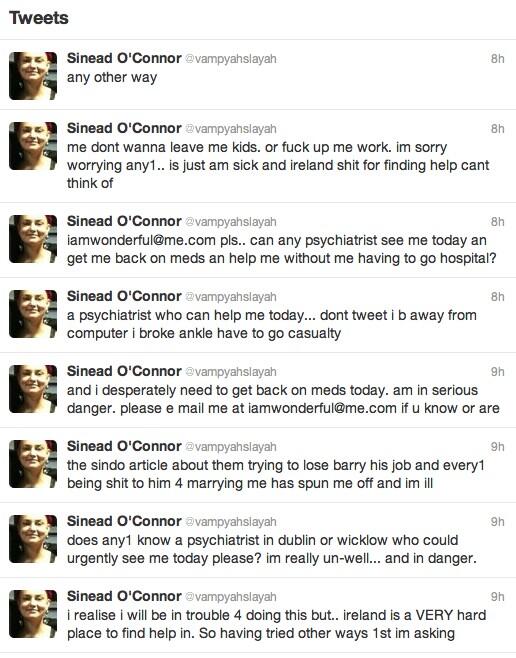
Cyrus apparently didn’t appreciate that O’Connor wrote the letter “in the spirit of motherliness and with love.” Instead, Cyrus tweeted a screen grab of O’Connor’s Twitter feed from 2012, and compared the singer to Amanda Bynes, who is currently receiving psychiatric care to address mental health issues.

BVqeKkhIAAAlVwQ

O’Connor was not amused and has threatened to sue the younger singer.  In another open letter published on her Facebook page, Sinead O’Connor wrote:

Who the f–k is advising you? Because taking me on is even more f–kin’ stupid than behaving like a prostitute and calling it feminism. You have posted today tweets of mine which are two years old, which were posted by me when I was unwell and seeking help so as to make them look like they are recent. In doing so you mock myself and Amanda Bynes for having suffered with mental health issues and for having sought help. It is most unbecoming of you to respond in such a fashion to someone who expressed care for you. And worse that you are such an anti-female tool of the anti-female music industry.”

Exactly:  making fun mental illness is NOT COOL.  Cyrus replied on Twitter,

“Sinead. I don’t have time to write you an open letter cause I’m hosting & performing on SNL this week, So if you’d like to meet up and talk lemme know in your next letter. :)”

O’Connor replied on Facebook:  “I have no interest whatsoever in meeting you. You had plenty of time yesterday to abuse Amanda Bynes .. an entirely innocent party.. and myself.. who also did nothing to deserve your abuse.. along with every other sufferer of mental health problems and every person who suffered abuse at the hands of priests. . .Cease behaving in an anti-female capacity. You will become the victim of it shortly. Soon it will be you the media ‘crazy’ .. and you will not enjoy it.. and you will appreciate people (like myself) standing up for you. Which I will be happy to do.. if you earn my respect today by apologising publicly.”

Some of you will probably say, why bother with what amounts to celebrity gossip?  Well, I’ve been a fan of O’Connor for years and was really dismayed by the reaction when she tore up a picture of the pope on Saturday Night Live in 1992. As The Atlantic reported last year “the media largely misunderstood why” O’Connor chose to protest against the Pope in this fashion.  Some called her “crazy,” others were merciless in their contempt.  Joe Pesci, who hosted SNL the following week, told the crowd, “She’s lucky it wasn’t my show. Cause if it was my show, I would have gave her such a smack. I would have grabbed her by her… her eyebrows. I woulda…” (tossing gesture)  The audience laughed and applauded.  Later that year, O’Connor was booed off the stage a tribute concert for Bob Dylan, who failed to make any remarks in her defense. During a rally in New York, “piles of her records, tapes, and CDs were crushed by a steamroller. Protesters declared the United States a ‘Sinead O’Connor-free zone.’ Within a year of her SNL protest, O’Connor had disappeared from the American pop scene.”

In an interview with Time a month after her SNL performance, O’Connor explained her actions:

“It’s not the man, obviously—it’s the office and the symbol of the organization that he represents… In Ireland we see our people are manifesting the highest incidence in Europe of child abuse. This is a direct result of the fact that they’re not in contact with their history as Irish people and the fact that in the schools, the priests have been beating the shit out of the children for years and sexually abusing them. This is the example that’s been set for the people of Ireland. They have been controlled by the church, the very people who authorized what was done to them, who gave permission for what was done to them.”

At the time, the interviewer was skeptical of O’Connor’s claims, but the recent revelations of widespread sexual and physical abuse in Catholic schools and institutions has proven her testimony to be dead on.  So, that’s why I’m on #teamSinead.  Peace, sister.

Freud and Free Speech: A Conversation between Psychoanalysis and Democracy (NYU)

Looks interesting.

Alexandra Bacopoulos-Viau's avatarh-madness

Saturday, October 26th

10 am-12 pm

Colloquium: Freud and Free Speech: A Conversation Between Psychoanalysis and Democracy

NYU Postdoctoral Program in Psychoanalysis and Psychotherapy

Location: 40 Washington Square South, Vanderbilt Hall, NYU Law School, Room 206

Free event & open to the public

Presenters:
Jill Gentile, Ph.D., NYU Postdoctoral Program in Psychotherapy and Psychoanalysis

John Ferejohn, Ph.D., Samuel Tilden Professor of Law, NYU Law School

Pasquale Pasquino, Ph.D., Global Distinguished Professor of Politics, NYU

Moderator of Roundtable:
Steve Botticelli, Ph.D., NYU Postdoctoral Program in Psychotherapy and Psychoanalysis

Roundtable Participant:
Seth Warren, Ph.D., Director, Center for Psychoanalysis and Psychotherapy of New Jersey

Abstract:
Both psychoanalysts and Americans tend to take free speech as a core value. But today, with psychoanalysis’ relational turn, free association is seldom discussed. Meanwhile, recent controversial Court decisions have challenged (if not degraded) the status of the First Amendment. We’ll contemplate…

View original post 102 more words

Blogging together beats blogging alone

On May 2, 2007, I launched Knitting Clio with the cryptic message, “Welcome to my blog. I am a “digital history hack” (not to be confused with Bill Turkel’s website), so please be patient as I learn how to do this!”

I neglected to mention that my blog was the product of a seminar I took at the Center for HIstory and New Media.  Initially, I was skeptical about Dan Cohen’s recommendation that academics should blog.  Who has the time?  I was also worried that putting my ideas out there on the Web would make them more vulnerable to intellectual theft.  Eventually, my concerns dissipated and Knitting Clio was born.   The frequency of my posts has dwindled considerably over the years but I’ve managed to keep in going.

Five years later, I was invited to be a contributor to Nursing Clio,  “a collaborative blog project that ties historical scholarship to present-day political, social, and cultural issues surrounding gender and medicine. Men’s and women’s bodies, their reproductive rights, and their healthcare are often at the center of political debate and have also become a large part of the social and cultural discussions in popular media. Whether the topic is abortion, birth control, sex, or the pregnant body, each and every one of these issues is embedded with historical dynamics of race, class, and gender. Our tagline – The Personal is Historical – is meant to convey that the medical debates that dominate today’s headlines are, in fact, ongoing dialogues that reach far back into our country’s past. The mission of Nursing Clio is to provide a platform for historians, health care workers, community activists, students, and the public at large to engage in sociopolitical and cultural critiques of this ongoing and historical debate over the gendered body. It is our contention that Nursing Clio will provide a coherent, intelligent, informative, and fun historical source for these issues.”

In other words, Nursing Clio does on a much larger scale what I hoped to do in Knitting Clio — except the “co-production of knowledge” through a group blog means that content appears regularly (at least 2-3 times per week).  We also read and comment on each others work before it appears.  Nursing Clio has attracted a much wider audience than Knitting Clio.  The most page views I’ve received in a day is 638while Nursing Clio received over 48,000 views on its best day.  My most recent Nursing Clio post, on the “Camp Gyno” viral video, received over 500 views the first day it was published.  So, clearly I’m getting more attention as a group blogger, as well as feeling like part of a community.  I think my best online writing, at least recently, has been for Nursing ClioSo, for me, blogging with other people has been more productive than blogging by myself. This doesn’t mean that Knitting Clio will disappear, but if you want to see what I’m up to on a regular basis, read Nursing Clio, and/or my Twitter feed.

Signal Boost: Reproductive Health Technology Healthcare in Our Hands #ECinOurHands

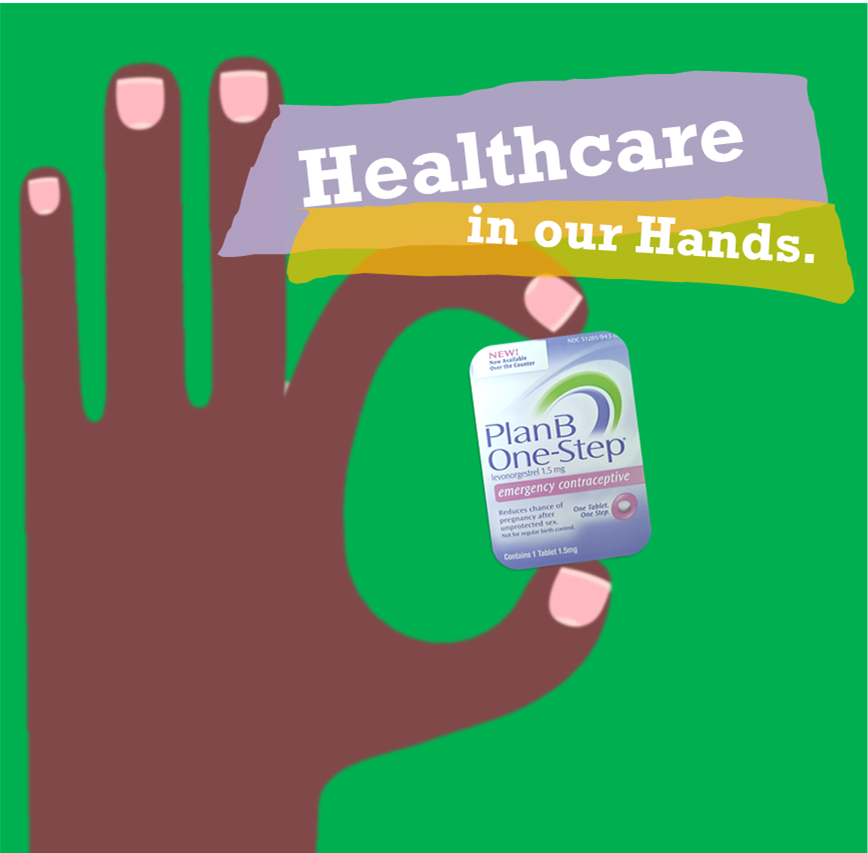
RHTP healthcare tumblr_static_tumblr_piccyRecently, the Reproductive Health Technologies Project launched its new Tumblr-based campaign, Healthcare in Our Hands, “The place to celebrate and explore the new status of emergency contraception.”  The site invites visitors to submit a photo of themselves with Plan B in their hands (or submit their stories about NOT having trouble getting EC). The RHTP says “your submission will help build RHTP’s map of where Plan B One-Step has been spotted on the shelf nationwide! You can also keep up with the campaign online by following the hashtags #ECOTC and #ECinOurHands on social media.”


As I describe in my book, the RHTP has been a leader in using the web for distributing information about emergency contraception and other reproductive technologies.  The first version of the emergency contraception website, launched in 1995, was one of the first health information sites on the World Wide Web.  More recently, the organization has entered into the arena of Web 2.0 and set up a Facebook page, joined Twitter, and now Tumblr, to disseminate its message, as well as collect stories from users.  Since I’m a historian interested in digital humanities, I wonder what will happen to this user-generated content?  Will it be preserved?  Should it be?  What will we do with it?

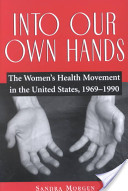
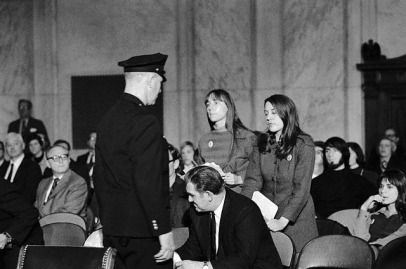
Also, from the perspective of the women’s health movement, it’s interesting how the phrase “in our hands” is being used inintoourownhandsbooks this context. In her book, Into Our Own Hands, Sandra Morgen explores how the women’s health movement “shifted power and responsibility from the medical establishment into women’s own hands as health care consumers, providers, and advocates.” Frequently, feminist health activists and drug makers were adversaries — e.g. Barbara Seaman‘s classic expose, The Doctors’ Case Against the Pill, and the DC feministsdemonstrations by members of DC Liberation (left) at the congressional hearings on the Pill in 1970.

In my current research project, I’m looking at how (to paraphrase Boston Women’s Health Book Collective co-founder Susan Bell) feminist health activists “came to grips” with the technoscience of contraception.   At a conference on New Birth Control organized by Planned Parenthood in 1990, Judy Norsigian described “new era of cooperation between pharmaceutical firms and women’s groups.”

Emergency contraception was one example of how feminist health activists and industry came together to sponsor a new birth control technology.  I wonder, though, how much this fulfills the Second Wave feminist goal of putting healthcare “into women’s hands.” What do readers think?

A Victory for Feminism (and a chance to plug my book) #emergencycontraception

ecp all agesvia National Women’s Liberation

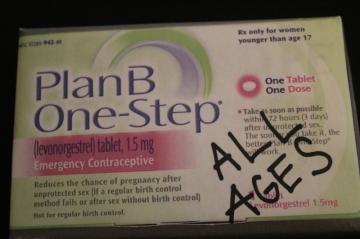
Yesterday, feminists won their 10-year battle to make emergency contraception (aka the morning-after-pill) available over the counter without age restriction:  the Obama administration announced it would drop its appeal of a federal court order that the FDA make the drug available for nonprescription use for all ages. In April, Judge Edward R. Korman of the U.S. District Court for the Eastern District of New York ruled in the Plaintiffs’ favor in Tummino v. Hamburg that there was no scientific basis for the Obama administration to continue to restrict access to emergency contraception. Judge Korman ordered that it be made available to women and girls “without a prescription and without point-of-sale or age restrictions within thirty days.” The Obama administration appealed that decision, but yesterday decided to cut its losses, fearing they would lose the appeal and “drastically elevate the debate over the politically delicate issue for Mr. Obama.”

According to Andrea Costello, Partnership for Civil Justice Fund Senior Staff Attorney and lead attorney for the National Women’s Liberation Plaintiffs, “The provision of emergency contraception without restriction is a landmark victory for reproductive justice. We are going to make sure that the government does indeed comply with the Court’s Order. The denial of full access to the Morning-After Pill has been an outrageous political decision and wholly without scientific basis – under both the Bush and Obama administrations. In recent days, we passed the 48th anniversary of the landmark birth control case of Griswold v. Connecticut, which recognized the constitutionally protected right of women to decide whether or not to have a child. It’s about time that the Obama administration recognized that access to all forms of birth control, including the Morning-After Pill, are essential for women to not just have this right, but exercise it.”

Annie Tummino, lead Plaintiff and Coordinator of National Women’s Liberation, said, “This decision by the Administration affirms what feminists have been fighting for all along – the Morning-After Pill should be available to females of all ages, on the shelf at any convenience store, just like aspirin or condoms. Women and girls should have the absolute right to control our bodies without having to ask a doctor or a pharmacist for permission.”

Cecile Richards, the president of Planned Parenthood said: “This is a huge breakthrough for access to birth control and a historic moment for women’s health and equity.”

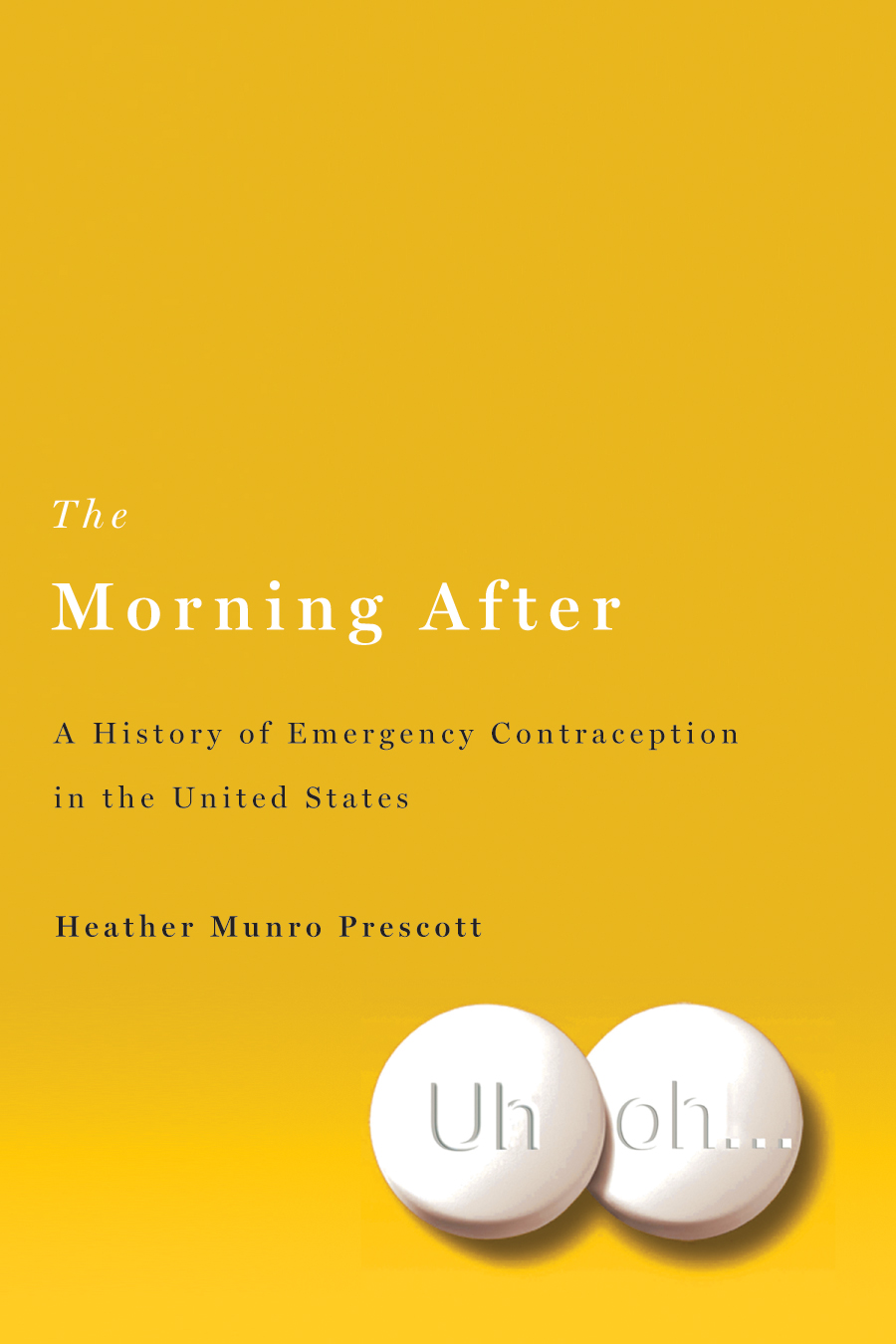
Cover for the Morning AfterThe Reproductive Health Technologies Project, whose activism on behalf of emergency contraception I describe in my book, The Morning After: A History of Emergency Contraception in the United States, announced, “This victory is long overdue! We are now one giant step closer to the day when Plan B will be available on store shelves to all women. We finally see light at the end of the tunnel in our decade long fight to give all women access to a safe, reliable, back up contraceptive option.”

However, Jodi Jacobson at RHRealityCheck says that this decision only covers Plan B OneStep and “does not include generic forms of emergency contraception, pointing to the the next front in the effort to ensure universal access to EC, as affordability of the method is critical to access.”

So the struggle continues, but it’s a start.