Mad Men and Modern U.S. History

Since both Historiann and Clio Bluestocking have posted on this, I thought that as a recent U.S. historian I would weigh in on the subject of the AMC series “Mad Men.” I have to side with those who say the show is very entertaining and extremely well-written. if it weren’t on so late at night, or if I had a DVR, I’d watch it more often (looks like I’ll be getting it on Netflix)

I would add that it’s a great way to remind ourselves of the way things were BEFORE the women’s movement — perhaps it should be mandatory viewing for women (and men) who think feminism was “irrelevant.”  As to historical accuracy, the costumes, sets, hairstyles, mannerisms, and so forth are very similar to those of TV shows and films from circa 1960 (e.g. “The Apartment” — on of my favorite films. In fact, the male sexual misbehavior in Mad Men appears to be modeled exactly after that in this film, except there’s no Jack Lemmon to serve as a moral center).

In contrast, CBS’s latest attempt at historical fiction, Swingtown, set in the mid-1970s, is really boring — which is saying a lot for a show about sex!  If you’re really interested in getting a feel for the material culture of that decade, “The ’70s Show” is the best. [seriously, Donna’s wardrobe could have come straight out of my closet circa 1977).

Theater Review: Carrie Fisher in “Wishful Drinking”

My husband and I just went to see the closing performance of Carrie Fisher’s one-woman show “Wishful Drinking” at Hartford Stage.  [follow their link to see a hilarious promo for the show and hear an NPR interview with Fisher].  I have to say this is one of the funniest shows I’ve ever seen, even funnier than “Postcards from the Edge.”  What a way to humanize the subject of mental illness without looking like a “freak.”  [although she is a “specimen” in an abnormal psychology textbook, which uses a photo of her as her “Star Wars” character Princess Leia)

She started off by stating that she had recently undergone a course of ECT, so if she blanked out or lost her place  that was why (she did use a teleprompter although didn’t look at it much).  The act covered a lot of ground — her scandal-ridden family history, her acting career, her marriage to Paul Simon, and of course her multiple experiences with rehab and psychiatric hospitals.   Her mockery of George Lucas and the whole “Star Wars” experience aftermath (including her own special class of stalkers) was especially funny.   I wish I could remember more of the brilliant one-liners — the only one that sticks is “Marx said that religion was the opiate of the masses, and I’ve taken masses of opiates.”

I also liked her idea of having a bipolar pride parade — the depressives could staff the floats from their beds if needed,  while those who were manic could have marching bands.

It’s too late for those in Hartford to see the show, but if it comes to your town, I highly recommend going to see it.

Nostalgia Time: Bob Newhart and Mental Illness

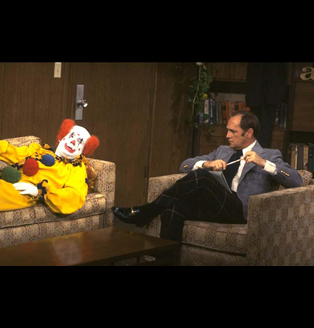
This past Sunday, I took a break from Olympics coverage to watch the excellent PBS American Masters episode on Bob Newhart.  The documentary reminded me how much I loved the original “Bob Newhart Show” (the later one, not so much, even though it was set near my home town in Vermont).  I was also struck by Newhart’s recollections on why the producers decided to make Bob Hartley a psychologist:

“Then they wondered what kind of occupation would that be and suggested psychiatrist . . I said, I think psychiatrists really deal with more disturbed patients, and I don’t think we should get our humor from schizophrenics and multiple personalities and bipolar people.  So I suggested a psychologist.”

Playing a psychologist also appealed to Newhart because “when dealing with patients, no matter how ridiculous they are, you can’t let on that they are ridiculous.”

As I recall, the series did humanize persons who sought help from psychologists, but I’m wondering just how much the weekly “parade of crazies” really improved public understanding of mental illness.  Thoughts anyone?

I’m So very Honored

I’m feeling so very honored, for two reasons:

1.  Thanks to my good friend, Historiann, I have been invited to be on a panel on history blogging for the “Little Berks” meeting in October.  My co-panelists will be  Tenured Radical and Clio Bluestocking.  Distinguished company indeed!  Among the things we are to discuss are “whether there are issues that affect feminist history blogging differently than blogging in general; issues of voice, anonymity, and so on.”

2.  Clio Bluestocking has included me in her list for this meme:

Thanks Clio!  Her instructions are to pass the love forward by listing my favorite Brilliante Bloggers.  Well, along with the blogs mentioned above, I would include my colleague Jason at The Saltbox; fellow Cornellian Sungold at Kittywampus; the folks at Disability Studies, Temple U; and the always enlightening and never boring (despite her protestations to the contrary) Trouble with Spikol.

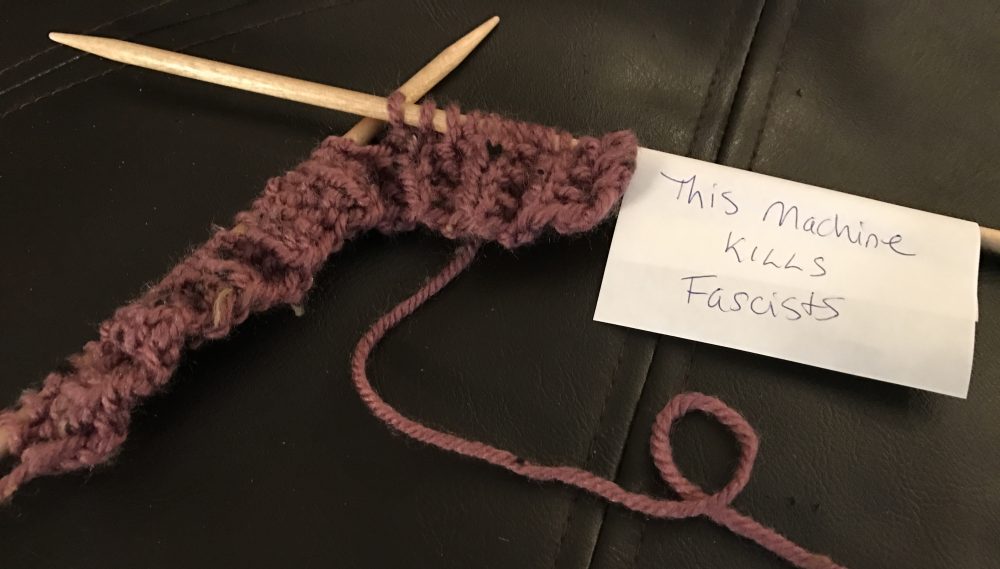
Knitting Clio also does carpets

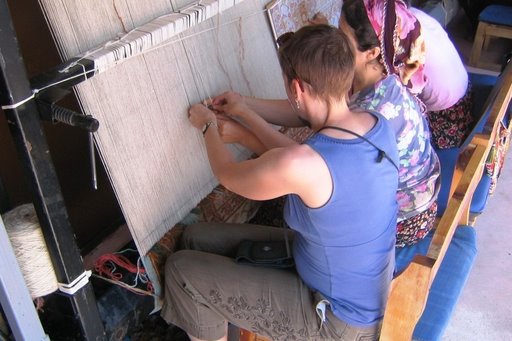
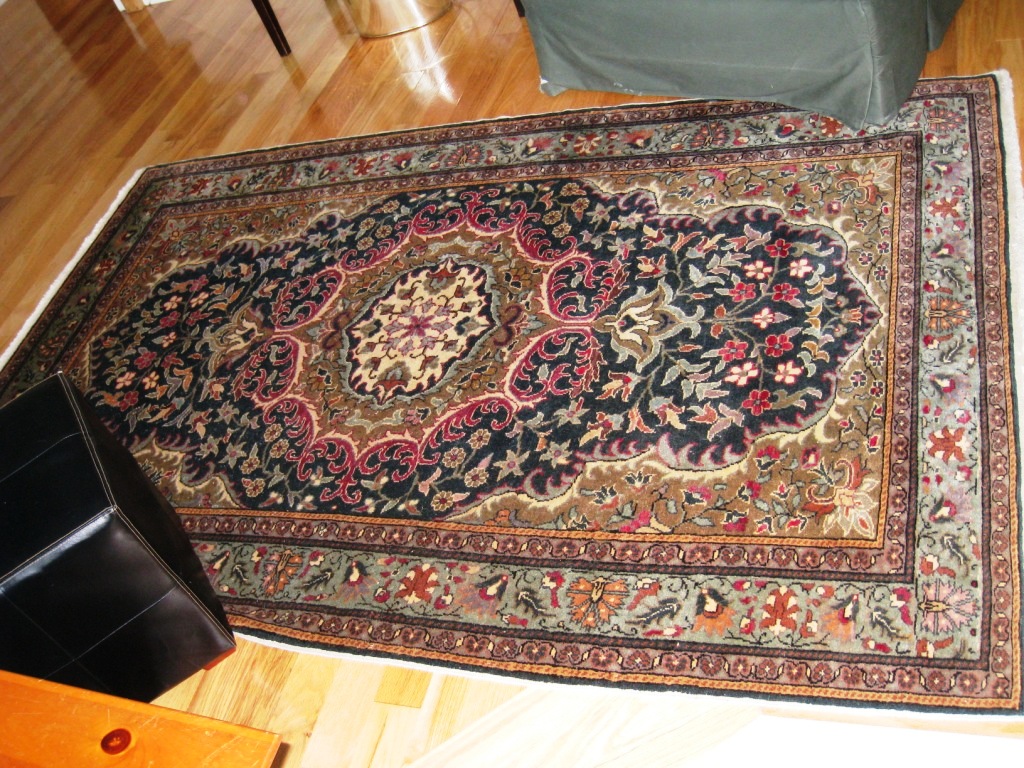
Regular readers of this blog have noticed that I seldom post anything fiber-related on this blog (“knitting” is meant to be metaphorical as well as a feminist, progressive alternative to this blog), so here is a photo of me learning to weave at a carpet showroom near Ephesus in Turkey.  Turkish weavers of pile carpets use a symmetrical, double-knot technique (aka the “Turkish knot” or the “Gordes knot”) so it takes way longer than weaving on a flat weave loom (which is used for making kilms).  No wonder these suckers cost a fortune!  Don’t think I’ll be trying the weaving anytime soon, but we did buy this nice specimen.

Back from Disability History Conference

I got back very early this morning (2am) from the Disability history conference and extended vacation with various family members.  Penny Richards has a post on her panel here.  My panel, and the conference as a whole, went extremely well.  It was reassuring to hear others mention the need to look at disability outside of institutions.  Sarah Rose, a recent Ph.D. from U of Illinois, Chicago, observed that in working-class neighborhoods, having a work-related disability was “normal” — individuals injured on the job continued to be part of their communities, although their employment opportunities and income were markedly diminished.

There were also a number of papers related to childhood/adolescence — and I recommended that folks at the conference submit proposals for the Society for History of Childhood and Youth conference at Berkeley next July.

One of the most interesting discussions regarded the limits of the medical model/social model dichotomy (briefly, the medical model situates defines disability as pathology, and places the burden on the disabled person to “recover” or “overcome”; the social model, on the other hand, looks at how social forces work to exclude disabled persons from full participation in society. )  Paul Longmore argued that access to appropriate medical treatment has always been part of the disability rights movement, and he does not see any incompatibility between seeking medical treatment and advocating for civil rights.  He is more concerned with public policies and social service professions that pathologize disabled persons and treat them as something to be “fixed” or “cured” or at least “corrected” into adopting a “positive” outlook on life.

Some other issues raised by Rosemary Garland Thompson in the final plenary session:

1.  The conceptual framework of disability

2. The intersectionality of disability with other identities, such as race, gender, class, age.

3. materiality — i.e. the interaction between the physical body and the material world.

4. how to maintain the political aspect of our work while avoiding presentism.

These are brief notes — maybe Penny can help me out here?

Disability History Conference: Writing Comments, Feeling Rushed and Insecure

I’m finishing up comments for my session at the conference, Disability History: Theory and Practice, in San Francisco at the end of this week.  My session is entitled “Theory and Method: Defining Disability Historically III.” The first paper is “What is a Disability? The Historical Example of Incompetency” by Kim Nielsen.  The other paper is “The Theory and Practice of Making Mad People’s History Public History,” by Geoffrey Reaume.  My instructions are that ” comments should focus on the larger implications theoretically and methodologically for the study of disability history, the connections of these papers with other areas of disability history and of the study of disability, and with other areas of historical study.” I’m feeling insecure partly because I don’t have a lot of time to do this (wish I’d received the papers sooner!) but also I’m realizing that I don’t know as much as I should about disability history and the difference between this and disability studies.  I’m saving more detailed, specific comments on the papers for the authors, but here’s what I think I will do:

Before I begin my comments, I think it’s important to say something about my background and how I came to the field of disability history. My training at Cornell was in the social history of medicine, which takes the patient’s voice as a starting point and places medical consumers at the center of analysis. I also was trained in women’s history, with a multicultural emphasis, so learned how medical theory reinforced gender norms, racial stereotypes, and social hierarchies. Yet I also learned that clients were not passive victims of medical opinion and social control. Instead, patients and their families played an active role in the clinic and at the bedside, arguing with doctors, shopping around for care that suited their needs and pocketbooks, accepting and ignoring expert advice as they saw fit. My work on adolescent medicine and student health has explored how teenagers and young adults shaped and legitimized these medical fields.

I didn’t really think of myself as a disability historian until a book chapter I wrote, entitled, “’I Was a Teenage Dwarf’:The Social Construction of ‘Normal’ Adolescent Growth and Development in Twentieth Century America” appeared in a list of recent articles on disability history compiled by Penny Richards in 2002. Not long after that, I was diagnosed with bipolar disorder. So, here I am, a historian with a disability doing disability history, but still consider myself a novice in this field. Nevertheless, I think my background and experience in the social history of medicine, women’s history, and the history of childhood and adolescence can provide some useful categories of analysis to the field of disability history.

Kim Nielsen’s paper explores the question what “counts” as disability. I would agree that this eludes easy definition and add that this is especially problematic when defining mental disability. I’ve noticed a disturbing trend in a series of recently published books such such as Mad, Bad and Sad: Women and the Mind Doctors by Lisa Appignanesi; or The Loss of Sadness: How Psychiatry Transformed Normal Sorrow into Depressive Disorder by Allan Horwitz and Jerome Wakefield; and Shyness: How Normal Behavior Became a Sickness by Chrisopher Lane, critique the ways in which the mental health professions and Big Pharma have conspired to turn “normal” emotions and feelings into diseases.

I must confess that I find these books both intriguing and troubling. On the one hand, they are pretty consistent with historical work that demonstrates how deviance from accepted social norms was often classified as mental illness – Kim uses the example of how feminism was construed as a form of “madness;” others have looked at homosexuality.

On the other hand, these works seem to assume that there are clear boundaries between “normal” emotions and “severe” mental illness.  Another danger is that critiques of this sort trivialize the lived experience of having a mental illness and/or romanticize mental illness as a source of “creativity” or “brilliance.”

Other issues that are coming through in the paper:  who can/should write the history of disability? Does having a disability make one more qualified? [this question comes up in women’s history as well — I would argue that men can write women’s history too, just like women can write history that is NOT about women] The reliability of psychiatric survivor stories reminds me of similar questions regarding slave narratives as sources.  The ways in which gender, race, class, age, and other factors shape the experience of disability.

Finally, I want to say something about how we need to move beyond the asylum for sources and an interpretive framework for what Geoffrey calls “mad people’s history.” Doing this will not be easy: institutions are convenient repositories. Access to patient records in the United States has become much more difficult because of the Health Insurance Privacy and Portability Act. However, I think it’s time that we stop allowing the history of institutionalization/deinstitutionalization drive the narrative of mad people’s history, much in the same way that African-American historians have moved beyond the institution of slavery in order to capture the diversity of experience of members of the African diaspora.

Okay, maybe I have something to say after all . . .

Book Meme

My buddy Kittywampus has posted this book list meme — see how many you have read.   Supposedly the average American has only read six of the books on the list, so I’m  not doing too bad although some of these choices are embarrassing.

The rules are:

1) Bold what you have read
2) Put in italics what you have started to read
3) Put an asterisk next to what you intend to read

So, here’s my list.

1.  Pride and Prejudice *– Jane Austen — nope, but seen the miniseries with Colin Firth.

2 The Lord of the Rings – JRR Tolkien — tried it, couldn’t get beyond the first chapter of The Hobbitt.

3.  Jane Eyre — Charlotte Bronte

4 Harry Potter series – JK Rowling okay, I only read the first one does that count?

5 To Kill a Mockingbird – Harper Lee

6.  The Bible – read parts of it

7. Wuthering Heights — Emily Bronte
8. Nineteen Eighty Four – George Orwell — or maybe it was just the Mac commercial?

10. Great Expectations — Charles Dickens

11 Little Women – Louisa May Alcott
12 Tess of the D’Urbervilles – Thomas Hardy
13 Catch 22 – Joseph Heller

14. Complete works of Shakespeare — yeh, right.  I’ve read Hamlet and the Scottish play.

15 Rebecca – Daphne Du Maurier — why bother, when the film with Sir Lawrence is so fabulous?

16.  The Hobbit — JRR Tokien

17 Birdsong – Sebastian Faulks
18 Catcher in the Rye – JD Salinger

19 The Time Traveler’s Wife — Audrey Niffengegger

20 Middlemarch — George Eliot
21 Gone With The Wind – Margaret Mitchell
22. The Great Gatsby- F. Scott Fitzgerald
23 Bleak House – Charles Dickens

24 War and Peace — Leo Tolstoy

25 The Hitch Hiker’s Guide to the Galaxy – Douglas Adams
26 Brideshead Revisited* – Evelyn Waugh
27 Crime and Punishment – Fyodor Dostoyevsky
28 Grapes of Wrath – John Steinbeck (I’d like to re-read this one, as well as East of Eden)
29 Alice in Wonderland – Lewis Carroll

30 The Wind in the Willows — Kenneth Grahame
31 Anna Karenina – Leo Tolstoy

32 David Copperfield – Charles Dickens

33. Chronicles of Narnia — C.S. Lewis

34.  Emma* — Jane Austen

35.  Persuasion* — Jane Austen

36. The Lion, The Witch and the Wardrobe — C.S. Lewis

37 The Kite Runner – Khaled Hosseini
38 Captain Corelli’s Mandolin – Louis De Bernieres
39 Memoirs of a Geisha – Arthur Golden
40 Winnie the Pooh – AA Milne
41 Animal Farm – George Orwell
42 The Da Vinci Code – Dan Brown (but I wish I hadn’t!)
43 One Hundred Years of Solitude – Gabriel Garcia Marquez — twice!
44 A Prayer for Owen Meany – John Irving
45 The Woman in White – Wilkie Collins
46 Anne of Green Gables – LM Montgomery
47 Far From The Madding Crowd – Thomas Hardy
48 The Handmaid’s Tale – Margaret Atwood
49 Lord of the Flies – William Golding
50 Atonement – Ian McEwan
51 Life of Pi – Yann Martel

52 Dune — Frank Herbert

54 Sense and Sensibility* — Jane Austen

54 Sense and Sensibility – Jane Austen
55 A Suitable Boy – Vikram Seth — left this one on an airplane, may get around to finishing it someday
56 The Shadow of the Wind – Carlos Ruiz Zafon
57 A Tale Of Two Cities – Charles Dickens
58 Brave New World – Aldous Huxley
59 The Curious Incident of the Dog in the Night-time – Mark Haddon
60 Love In The Time Of Cholera – Gabriel Garcia Marquez
61 Of Mice and Men – John Steinbeck
62 Lolita – Vladimir Nabokov

63 The Secret History — Donna Tartt
64 The Lovely Bones – Alice Sebold
65 Count of Monte Cristo – Alexandre Dumas

66 One the Road — Jack Kerouac
67 Jude the Oscure — Thomas Hardy

68. Bridget Jones’s Diary – Helen Fielding
69 Midnight’s Children – Salman Rushdie

70 Moby Dick — Herman Melville
71 Oliver Twist – Charles Dickens
72 Dracula – Bram Stoker
73 The Secret Garden – Frances Hodgson Burnett
74 Notes From A Small Island – Bill Bryson

75 Ulysses – James Joyce
76 The Bell Jar – Sylvia Plath
77 Swallows and Amazons – Arthur Ransome
78 Germinal – Emile Zola
79 Vanity Fair – William Makepeace Thackeray
80 Possession – AS Byatt
81 A Christmas Carol – Charles Dickens
82 Cloud Atlas – David Mitchell
83 The Color Purple – Alice Walker
84 The Remains of the Day – Kazuo Ishiguro
85 Madame Bovary – Gustave Flaubert
86 A Fine Balance – Rohinton Mistry
87 Charlotte’s Web – EB White
88 The Five People You Meet In Heaven – Mitch Albom

89 Adventures of Sherlock Holme — Sir Arthur Conana Doyle

90 The Faraway Tree Collection
91 Heart of Darkness – Joseph Conrad
92 The Little Prince – Antoine De Saint-Exupery
93 The Wasp Factory – Iain Banks
94 Watership Down – Richard Adams

95 A Confederacy of Dunces — John Kennedy Toole

96 A Town Like Alice – Nevil Shute
97 The Three Musketeers – Alexandre Dumas
98 Hamlet – William Shakespeare
99 Charlie and the Chocolate Factory – Roald Dahl
100 Les Miserables – Victor Hugo