|
|||||||||||||||||||||||||||||||||||||||||||||||
NAMI Stigmabusters Alert: The Crazies and Shutter Island
Reply
|
|||||||||||||||||||||||||||||||||||||||||||||||
 Hey folks,
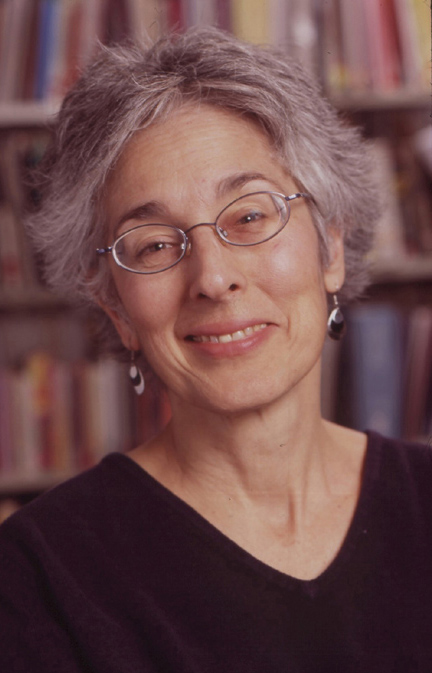
One of my women’s history heroines is coming to my campus. Since this year’s theme is “Writing Women Back Into History,” it’s fitting that we have booked a noted woman author. Here’s more information:
The Ruthe Boyea Women’s Center and the Committee on the Concerns of Women invites you to purchase your ticket to attend….
The 2010 Women’s History Month Luncheon
Keynote Speaker
Judy Norsigian
co-author of Our Bodies, Ourselves
“Women’s Health and the Media: Sorting Fact from Fiction”
Tuesday, March 9, 2010
12pm
Memorial Hall, Connecticut Room
Ticket Cost: $20.00. To purchase your ticket, contact CENTix at 860- 832-1989.
Meal choices: Beef Tenderloin Gratin, Pan Seared Salmon, Chicken Francais or Vegetarian Tart
__________________________________________________
2pm
Lecture, Free and Open to the Public
Memorial Hall, Constitution Room
Speaker: Judy Norsigian
“The Women’s Health Movement: Accurate, Accessible Information on Health, Sexuality, and Reproduction”
Booksigning after lecture. Books can be purchased at the CCSU Bookstore or at the event.
___________________________
Judy Norsigian Bio: Co-founder of the BWHBC and co-author of all editions of Our Bodies, Ourselves, Judy is a graduate of Radcliffe College and an internationally renowned speaker and writer on a wide range of women’s health concerns. Her interests include national health care reform, tobacco and women, midwifery advocacy, reproductive health, genetic technologies, and contraceptive research. She has appeared on numerous television and radio programs including Oprah, Donahue, The Today Show, Good Morning America, and NBC Nightly News with Tom Brokaw.

As historian David Gerber observes in an article on the Blind Veterans Association, “positive stereotypes can be as big a burden as negative ones.” Gerber uses the example of the “cliche that the blind are capable of deeper wisdom than the sighted.” Blind disability activists, he writes, “denounce this flattering stereotype, just as they denounce negative stereotypes of the blind as helpless or doomed to live in existential or cognitive darkness.” [New Disability History, p. 313].
I’d like to do the same for the mythical link between “madness” and “brilliance” that have emerged in discussions of the shootings at University of Alabama. This article from ABC news quotes a number of psychiatric experts who claim that the “insular lives” of professors — especially those in the sciences — makes it easier to hide a mental illness. For example, according to Dr. Igor Galynker, associate chairman for the department of psychiatry and behavioral science at psychiatry at Beth Israel Medical Center in New York City and professor of psychiatry at Albert Einstein college of Medicine,
“They [scientists] work in solitude and they don’t need to interact in complex social situations and can be paranoid for a long time without someone realizing.” Using the example of John Nash, the Nobel-winning economist from Princeton, portrayed in “A Beautiful Mind,” [pictured above], Galynker states, “”Brilliant scientists are supposed to be crazy.” Even the Chronicle of Higher Education reinforces these stereotype of the “nutty” genius, declaring academia a “home to oddballs” and a “petri dish for madness” because of a “high tolerance for eccentricity.”
I really wish these articles would actually talk to professors in the sciences instead of administrators and folks in HR. Not only is it a myth that scientists work in isolation — collaborative work is the norm in the sciences — but severe mental illness is more often a hindrance than an asset to productive work.
I would say the same about Kay Jamison’s “evidence” of link between the artistic temperament and manic-depressive illness. While I admire Jamison’s skills as a clinician and her courage in sharing her first-hand experience with bipolar disorder, as a historian I just have to groan at these “pathographies” or retrospective diagnoses of historical figures.
via Jack and Jill Politics, who suggest that the best way to prevent violence in the workplace is not to focus on the weird people, but to treat privileged white people the same as people of color. Margaret Soltan has a roundup of Bishop’s violent past. Would a black female professor have received probation after punching another woman in the head at an IHOP? Not bloody likely.
 She’s a brilliant scientist. She’s been described as “weird.” She talks excessively, often going off on tangents. She’s socially awkward and often “tone deaf” to other’s body and facial language. No, I’m not talking about her. I’m talking about her, the woman pictured at the left, focus of a new bio-pic on HBO.
This article from the Chronicle of Higher Education observes that while there are counseling services for students, “fewer resources are available for assistance with faculty and staff mental-health issues, and we have a high tolerance for erratic behavior.” The author advises us in higher education to look for “erratic” behavior in faculty and staff. But how does one define “erratic”? Or “normal” for that matter? As I’ve said before in the context of shootings by students, will this latest incidence of violence lead to better mental health services for those at risk, or further ostracism of people with mental illnesses and others who are not “neurotypical”?
via The Human Condition Blog – Newsweek.com, Historiann, Kittywampus, and others. University of Alabama, Huntsville biology professor Amy Bishop shot and killed several colleagues during a faculty meeting on Friday. Campus shootings are always shocking, but this was is especially so since, as Historiann observes, men are the overwhelming majority of mass murderers and the overwhelming majority of people who kill with guns.
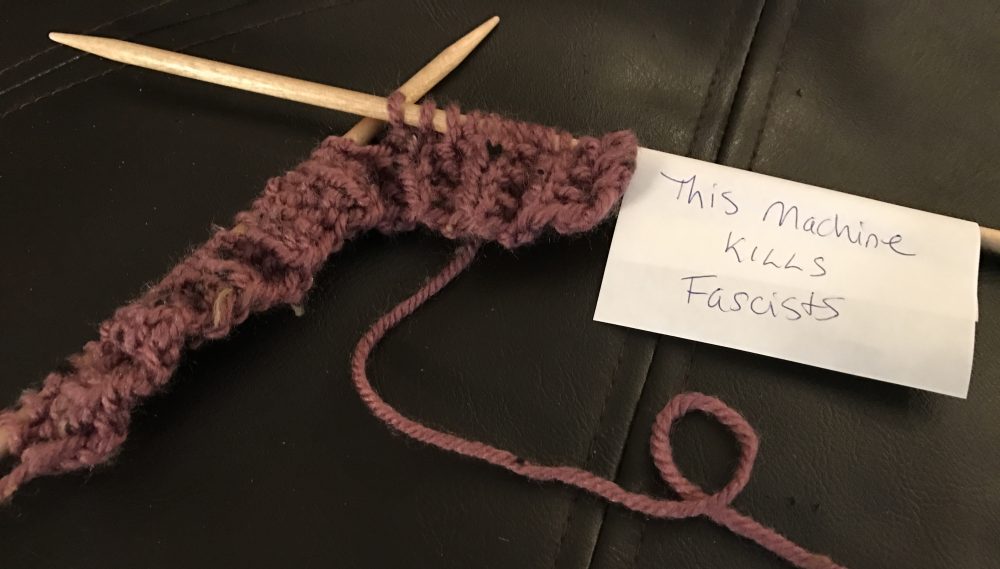
I was planning to wait until the weekend is over to comment on this and focus on my knitting, but even even the Ivory Tower Fiber Freaks group on Ravelry is abuzz about this. The facts are still developing so I hesitate to comment about Amy Bishop’s mental state. However, more than one article I’ve seen has raised the issue of Bishop’s mental state — e.g. did she have a psychotic break? Was she taking SSRIs, which can cause mania or psychosis? Bishop shot her brother, supposedly by accident, in 1986. Was that also the result of a psychotic or manic episode?
So, I’m just going to toss some initial thoughts out there, even if they turn out not to apply to this case. Previous instances of campus shootings have prompted more attention to student mental health issues. Will this case lead to more focus on faculty mental health? Our campus has an Employee Assistance Program, but how many people actually use it? How many more are afraid to get counseling because they don’t want to be labeled a “nut” — especially before they have tenure?
I’ll wait and see how this develops before I say more on this. Meanwhile, I’ll continue to stay calm and carry yarn.
Added later: this article from SF Gate hints that bullying might have been a factor, although the author does it in a stupid assed intellectually lazy way (i.e. Southerners are stupid, hate intellectual Yankees, especially those who are from Harvard).
Update 2/15/10: From the website Chronicle of Higher Education. The ableist language in the comments is quite disturbing.
Here’s a first hand account from another UAH faculty member. I hope they’re including faculty in the crisis counseling.

Join Knitting Clio and other fiber addicted academics for Ravelympics 2010. This is a “competition” organized by the online fiber community Ravelry to coincide with the Olympic Games. The first one was held in conjunction with the 2008 Summer Games in Beijing. [in between, Ravelry held the World’s Works-in-Progress Wrestlemania] The concept: cast on or start your project during the opening ceremonies on February 12, and finish the project by the end of games on February 28th. Official rules are posted here.
NB: Ravelympics is separate from the Knitting Olympics organized by Yarn Harlot, which also looks like a lot of fun. I wonder if I can enter both?
via Our Bodies Our Blog. They report, “A recent ABC news piece and two new journal articles (in The Lancet and Obstetrics and Gynecology) have drawn attention to an emergency contraception drug that is not currently available in the U.S. but apparently has been submitted to the FDA for review.”
I need to figure out how to fit this in the book project, but first I need to look up ulipristal acetate.
 This blog has been quiet lately since I maintain two other blogs. One is the course blog for my graduate digital history seminar. The other is Women Historians of Medicine, where we are having a lively discussion about suggestions for an exhibit honoring the 50th anniversary of the Pill that Suzanne Junod at the FDA History Office is putting together.
Since I’m an expert on the history of college health, no discussion of the history of the Pill would be complete without mentioning that female students’ access to the Pill was recently weakened by changes in Medicaid pricing rules. Prior to 2005, pharmaceutical companies were able to provide Title X clinics and college health centers with birth control pills at a substantial discount. In 2005, these rules changed, and in 2007 the price of birth control pills for women who came to these clinics skyrocketed, going from $10 to as much as $50 per package. The Feminist Majority Foundation Campus Program worked hard to change this, and in 2009 Congress reversed this and once again made low-cost birth control clinics available to student health centers and clinics for low-income women. Yet some student health centers still don’t offer discounted pills. So, to ensure access, please do the following:
It is a truth universally acknowledged that a single woman must be in want of a drink
Orientalism and Yoga in the 21st Century
is a Vice Provost, Dean, and Professor at Northeastern University
History for the Future
By Norse code
Follow me on twitter: @jmedwards29
Why Do You Write Like You're Running Out Of Time?
A site to think about my academic work the same way I do everything: by overthinking it.
Blog for History 511: Digital History
History in the Digital Age
History Happens
A Group Blog on Early American History
A journal of New England cultural, literary, political, and social history
The latest news on WordPress.com and the WordPress community.
 Knitting Clio