Invigorated and Exhausted from American Association for the History of Medicine meeting

I got back from the annual meeting of the American Association for the History of Medicine meeting yesterday as as usual am bursting with ideas and buried in work.  So, this will be quickie overview with more reflection and analysis at a later date.

First, I’d like to report that my forthcoming book  (cover photo at left) is moving much closer to actually being out.  I received the page proofs about a week ago and am working on getting them back ASAP.  Unfortunately the editor decided not to have them available at the meeting because they aren’t corrected — but there’s always next year.  Hopefully they will be available at the Berkshire Conference of Women Historians next month.

Meanwhile, I got an opportunity to plug my book and establish myself as an authority on the “morning after pill” in an interview for a documentary by Caryn Hunt, President of the Philadelphia chapter of the National Organization for Women.  It was a lot of fun and I wasn’t as nervous as I expected.  Also, I got a new suggestion for a doppelganger. Thanks,  I agree!

My presentation on The Pill at 50: Scientific Commemoration and the Politics of American Memory went very well and I had a substantial audience (at least 30) despite it being on first thing on the last day of the conference.  The reaction was enthusiastic (especially from this leading authority on the history of the Pill) so I’m planning to expand this and submit it to the Bulletin of the History of Medicine.

Since I’m teaching in a public history graduate program, and living in Connecticut, my “commemorative mania” will continue with some kind of commemorative event celebrating the 50th anniversary of Griswold v. Connecticut in 1965 (which follows soon after my own half-century mark).  Not sure what this will be but the folks at Yale and Planned Parenthood are keen so looks like it will happen.  I also told the editor at Rutgers that I’m interested in doing a narrative history (as opposed to a legal history that uses Griswold as a lead-up to Roe v. Wade rather than an event in it’s own right).  As it turns out, a very distinguished senior historian of medicine and public health was one of the witnesses who testified.  It seems that the New Haven police was willing to shut down the clinic so that birth control advocates in the state could use this as a test case, but they needed evidence that the clinic was dispensing birth control.  This historian was a graduate student at Yale and was one of Dr. Buxton’s patients.  She volunteered to get the evidence (a tube of contraceptive jelly) and then went straight to the police department to turn in the incriminating evidence and give a statement.  When she blurted out that contraception was “women’s right”, the Irish cop asked her, “don’t you mean a married woman’s right?” What a story!

I heard lots a great papers and connect with all my history of medicine buddies.  However, work awaits so I’ll have to continue these conference report later (most likely much later since research papers and finals will be landing on my desk shortly).
Blogging for Emergency Contraception

via Back Up Your Birth Control.  Today is the 10th annual national day of action for Back Up Your Birth Control, a media campaign sponsored by the National Institute for Reproductive Health. I’ve agreed to blog to raise awareness about this.

Because I’m a shameless self-promoter, I’m also going to start with an update on my forthcoming book, The Morning After: A History of Emergency Contraception in the United States.  The page proofs will be arriving in a couple of weeks.  Meanwhile, here’s the blurb that will appear on the publisher’s website, catalog, and the book cover:

“Since 2006, when the “morning-after pill” Plan B was first sold over the counter, sales of emergency contraceptives have soared, becoming an $80 million industry in the United States and throughout the Western world. But emergency contraception is nothing new. It has a long and often contentious history as the subject of clashes not only between medical researchers and religious groups, but also between different factions of feminist health advocates.

The Morning After tells the story of emergency contraception in America from the 1960s to the present day and, more importantly, it tells the story of the women who have used it. Side-stepping simplistic readings of these women as either radical feminist trailblazers or guinea pigs for the pharmaceutical industry, medical historian Heather Munro Prescott offers a portrait of how ordinary women participated in the development and popularization of emergency contraception, bringing a groundbreaking technology into the mainstream with the potential to radically alter reproductive health practices.”

I had to stop somewhere, so the book shortchanges the most recent developments — especially the most recent efforts to use of social media to raise awareness of EC. [BTW, the Back Up Your Birth Control campaign has a Facebook page and you can find related posts on Twitter using #backitup and/or by following @nirhealth).

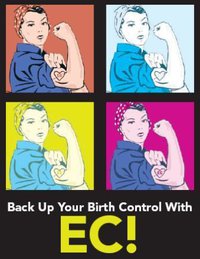
The use of the Web to promote EC originated in the early 1990s with the emergency contraception website at Princeton. The Back Up Your Birth Control Campaign began amidst the battle to get the FDA to approve Plan B as an over-the-counter drug.  What’s interesting to me as a historian is the use of graphic artist J. Howard Miller’s “We Can Do It” poster, which he created for Westinghouse under the sponsorship of War Production Board (this image should not be confused with the Norman Rockwell painting “Rosie the Riveter” that appeared on the cover of the Saturday Evening Post May 29, 1943, and is still under copyright.  The Rockwell paiting was recently acquired by the Bentonville Museum in Arkansas, founded by Wal-mart heiress Alice Walton and the Walton Family Foundation — oh the irony!).  Personally, I like the Rockwell image better, but do you think the Waltons will allow anyone to use it without paying major $$ — not bloody likely!  “We Can Do It” does not have such copyright restrictions, so various groups use it freely.  (for more on these images and American popular culture, go here).  It’s become a feminist icon of female empowerment, but this article demonstrates that “during World War II the empowering rhetorical appeal of this Westinghouse image was circumscribed by the conditions of its use and by several other posters in its series.”

Returning to EC — the history of the various awareness campaigns over the years is fascinating but was nearly impossible to illustrate in the book because, like many of us, the organizations that created these images didn’t preserve them once they were no longer useful.  Others put them on their websites, then discarded the original files.  Then there’s the problem of finding the copyright holder and getting permission from him/her.  Here’s an image that I couldn’t use because there was no digital file that had a high enough resolution for reproduction — it also nicely sums up my frustrations with the whole process:

image courtesy of Canadian Federation for Sexual Health

So, here’s a recommendation for the Back Up Your Birth Control Campaign — back up your “born digital” materials and preserve your digital heritage!

Trumbull Library presentation on Henrietta Lacks and the Immortal Life of Health Care Inequalities

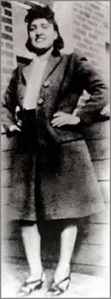
Earlier this week, I helped lead a discussion of Rebecca Skloot’s book The Immortal Life of Henrietta Lacks as part of the Trumbull public library‘s One Book One Town series.  My co-leader was Laura Stark from the Science and Society/Department of Sociology at Wesleyan University.  Laura was a fact-checker for the book while she was a fellow at the Office of National Institutes of Health History.  Laura focused on points raised in her forthcoming book, Behind Closed Doors: IRBs and the Making of Ethical Research, which will be published in November with The University of Chicago Press.  She looked at how the treatment of human subjects in the United States has evolved since the Second World War and this impacts Institutional Review Boards today.  My emphasis was on standards of care for cervical cancer patients then and now, and how this intersected with prevailing issues of race, gender, and class.   As Skloot observes, Henrietta’s care was typical of teaching hospitals at this time, and Johns Hopkins was one of the few in the region that admitted African American patients (albeit in segregated wards).  During the 1940s and early 1950s, there was no Medicaid and third party private insurance was only beginning to become an employee  benefit.  So, as a “charity patient” Henrietta received state of the art cancer treatment that many at that time could not afford.  The care would have been the same had she been white.  Yet, the prevailing attitude at the time was that since “charity cases” were treated for free, doctors were entitled to use them in research, whether the patients realized it or not. Henrietta’s doctor once wrote, “Hopkins, with its large indigent black population, had no dearth of clinical material.”

Also, epidemiological studies of cervical cancer tended to reinforce cultural prejudices about race and socioeconomic status of the time period. By the early 1950s, researchers noticed that cervical cancer was common in prostitutes and others with multiple sexual partners; rare in Jewish and Muslim women; and practically non-existent in nuns and virgins.  There was considerable debate about whether this was due to an infectious agent or genetics. The notion that different races had propensity to certain diseases was common  — e.g. blacks were characterized as a “notoriously syphilis-soaked race” while Jewish persons were believed to be more prone to respiratory illnesses like TB. So, “race medicine” included the theory that Jewish and Muslim women were more likely to develop cervical cancer because of their “race.”  We now know that male circumcision helps prevent the transmission of sexually transmitted infections, such as the human papilloma viruses that cause many genital cancers. Starting in the 1950s, scientists explored the link between adolescent sexual activity and the development of cervical cancer later in life. Several epidemiological studies published in the 1950s and early 1960s indicated that women who married before age 20 appeared to be at higher risk for cervical cancer. Some speculated that women who had multiple “broken marriages” were especially susceptible. Some cancer researchers hypothesized that some kind of infectious agent transmitted by male partners was a contributing factor, and that the adolescent cervix was especially vulnerable to “epithelial transformation” by exposure to such an agent. Given that a disproportionate number of patients were nonwhite, non-Jewish women of low socioeconomic status, recommended that routine pap smears were especially important for “nonvirgins” from underprivileged groups. These findings also tended to reinforce prevailing stereotypes about the links between disease risk, race, and class – those living in poverty – especially if they were nonwhite – more likely to be “promiscuous.”

At the same time, the introduction of Pap smear led to the notion that “cancer was curable” if caught early — this provided the justification for annual gynecological examinations.  Prior to Medicaid,  a young woman of Henrietta’s social class would not have had access to routine preventive medical care. Thus, the health disparities indicated by cervical cancer studies were used to justify government funded preventive screening for those living in poverty.

Another recent development has been efforts by health activists to make medical research more inclusive.  As Eileen Nechas and Denise Foley show in their book Unequal Treatment reformers fought to make sure that all studies funded by NIH included women, racial minorities, children and adolescents, where appropriate, historically “decisions on what aspect of health to study, on what research protocol to fund” were based “not only on scientific merit . . . but on a judgment of social worth. What is valuable to medicine is who is valuable to society, and that is white men.”  Since the late 1980, health activists fought to make sure that all studies funded by NIH included women, racial minorities, children and adolescents, where appropriate; and made sure that diseases that disproportionately affected these groups got “equal time” and money.

Here are the discussion questions we gave to the audience:

Should people have a right to control what’s done with their tissues once they’re removed from their bodies? And who, if anyone, should profit from those tissues?

Deborah says, “But I always have thought it was strange, if our mother cells done so much for medicine, how come her family can’t afford to see no doctors? Don’t make no sense” (page 9).   Should Lacks family be compensated by those who profited from research on HeLa cells?

How does this story relate to recent history of health care reform, and attempts to expand access to medical advances made possible by research on HeLa and other human tissues?

How can medical professionals recognize that certain diseases affect certain racial/ethnic groups without replicating prejudices of old “race medicine”?

Blog for Choice 2011

As you can see from the graphic at left, the annual Blog for Choice Day was yesterday.   Since today is the actual 38th anniversary of Roe v. Wade, I figured, better late than not at all!  This year’s question, Given the anti-choice gains in the states and Congress, are you concerned about choice in 2011?

I don’t have much to add to other bloggers’ answer other than echo the overall consensus, Yes, I’m very concerned!

My worries extend beyond the choice of abortion — access to birth control also appears threatened, not so much by new laws, but more so because of economics.   The Republican majority in the House will not be able to revoke the health care law, at least not while President Obama is in the White House and the Democratic party still controls the Senate.  Yet, the existing health care law isn’t really adequate when it comes to contraceptive coverage.  Also, while many reproductive rights activists rightly celebrated making emergency contraception available over-the-counter (OTC), this might actually make things worse for some women because OTC products are not covered by private insurance plans or Medicaid.  Thus, while the rise of what pharmacy historicans call “OTCness” over the past two decades has weakened the boundary between patients and the health care professionals, it has done nothing to address the economic inequalities in the United States that continue to pose an insurmountable barrier to those without the means to pay for the products of this self-care revolution.

Documentary video on National Women’s Health Network

I’m still powering through the last few papers and exams, but am taking time to post this short documentary by/about the National Women’s Health Network.  The Network celebrated its 35th anniversary on December 16, 2010 (happy belated anniversary!)  They l will have a prominent place in my forthcoming book (which I plan to mail to the press after Christmas, I promise!)

And here’s a call for donations rom Executive Director Cindy Pearson:

Together, we have been improving women’s health in the US since 1975.

  • We bring the voices of women consumers to the policy and regulatory decision-making bodies in D.C.
  • We work to improve the health of all women by providing unbiased, evidence-based information that women need to make informed decisions about their own health.
  • We are supported by our diverse members from all across the country.

We play our watchdog role fearlessly. And, we do it without taking any financial contributions from drug companies, the health insurance industry, medical device manufacturers or anyone else with a financial stake in women’s health decision-making.

Will you help us?

We have a great opportunity with our 35th Anniversary Challenge Campaign. A small group of members are stepping forward with pledges to give $35,000 if we raise $35,000 from gifts ‘above and beyond’ usual year-end gifts.  These members generously pledged to help encourage others like you to step up and give more as well.  You can be sure that any gift you give to NWHN, large or small, will have a big impact on the lives of women and their families. Now, it’s on to the next 35!


Rape Rape Part II: Wikileaks and Julian Assange version

via Slate Double X

Where Rachel Larimore says that “Julian Assange is Creepy: So is His Arrest on Rape Charges.”   In a turn of phrase oddly reminiscent of Whoopi Goldberg’s comments about the rape charges against Roman Polanksi, Rachel writes:

“It’s not that the charges aren’t serious. They go beyond Assange allegedly not using a condom when a woman asked him to. He comes across as a creep and a misogynist. But they are still cases of “acquaintance rape,” which is notoriously difficult to prove.  And that just contributes to the idea among skeptics—and Assange’s lawyer, naturally—that these are trumped up charges designed to keep Assange from causing trouble for the United States and its allies. It doesn’t help that the last time Assange had a document dump, Swedish authorities wanted to question Assange and then released a statement backing off and saying that he “is not suspected of rape.”

So, according to Rachel, date rape must not _really_ be rape?  WTF?!

In response to Rachel, Amanda Marcotte argued that “Assange Defenders Attack Rape Accusers for No Good Reason.”

” I have to agree with you that the circumstances of Julian Assange’s arrest are suspicious as hell and that the charges against Assange seem credible enough.  I’m surprised at how many people find it impossible to hold both thoughts in their heads at once and believe that because Interpol is exploiting the sexual assault charges to get Assange, it must mean the charges themselves are lies.  I often caution people not to assume conspiracy when opportunism is what’s likely in play. Even before all this came out, I really disliked the hero worship of Assange, who has always put me off my lunch.  It’s possible both that Wikileaks is a necessary curative for government overreach and that its leader is out to serve his own ego needs above all.  Anyone who thinks that’s impossible needs to think harder about what’s going on when politicians get sentimental on the campaign trail.

What is disgusting to me is how much of the left has conveniently forgotten that women who file rape charges can pretty much always expect to have their names dragged through the mud, unless they were “lucky” enough to be raped by someone of much lower social status who also jumped out of the bushes to rape them.”

Thanks, Amanda.  This needed to said, and now it has, and I don’t have too!  Back to grading. . .

My blogging gets me on a conference program

Hey folks,

I turned my ramblings on the 50th anniversary of the contraceptive pill into a paper proposal for the 2011 annual meeting of the American Association for the History of Medicine.  Yay!   The title of my paper is “The Pill at 50: Scientific Commemoration and the Politics of American Memory.”  I’ll write more later but just thought I’d share this exciting news!

Added later:  here’s the abstract:

This paper will use coverage of the 50th anniversary of the contraceptive pill as a case study of collective memory and commemorative practice in the history of science and medicine. As Pnina Abir-Am observes in her introduction to Commemorative Practices in the Sciences, a “commemorative mania” has swept the world in the past several decades and relationship between memory and historical writing has become “a major element of both scholarly and public discourse in the twenty-first century.” I will show that like the Clemence Royer centennial celebration described by Joy Harvey in the same volume, celebration of the Pill’s 50th anniversary was a “focal point for feminism, politics, and science” in the United States. For the scientists who developed and tested the first contraceptive pills, the anniversary of the Pill was a way to affirm their collective professional past as well as reassert their professional authority in the present. The celebrations also illustrated culture wars over reproductive rights and the meaning of controversial events in the history of science and medicine in the United States. Finally, I will show that feminist analysis of this historical event was not monolithic, but reflects the complicated history of women’s relationship to contraceptive technology and medical experimentation since the 1960s.

Learning Objectives:

  1. Explain the ways in which different political, scientific, and social groups commemorated the 50th anniversary of the contraceptive pill.
  2. Understand how memory studies can be used as an analytical tool in the history of medicine.
  3. Explore the difficulties historians face in interpreting a politically controversial subject for the public.

Why I’m not surprised that most of the Bush family is pro-choice

via RHReality Check. Here’s an excerpt from the story by editor-in-chief Jodi Jacobson:

“The Bush family has a long history of support for Planned Parenthood.  Prescott Bush, father of George H. W. Bush (Bush 1) and grandfather of Bush 2 was the treasurer of Planned Parenthood when it launched its first national fundraising campaign in 1947. Birth control being controversial in the period pre- Griswold v. Connecticut (and yes, history obviously repeats itself), Prescott Bush was attacked for his pro-choice position and knocked out of the running for a Senate seat in Connecticut.

While he was a Congressman, George H.W. Bush was a leader in establishing Title X, the program that most in the contemporary right wing love to hate. The fact is that most programs today targeted for extinction by Republicans and Tea Party fanatics were either supported or established by…Republicans, albeit for reasons having more to do with population control than women’s rights.

In the sixties, the connections between family planning and economic security were becoming clearer.  President Lyndon Johnson was the first to establish public funding for family planning services as part of the War on Poverty. According to a brief review of legislative history by the National Family Planning and Reproductive Health Association Johnson began offering grants for family planning services in 1965, the same year the Supreme Court struck down the Connecticut law that prohibited the use of contraceptives by married couples in Griswold. Then, in the late sixties, the Social Security Act was amended to require state welfare agencies to make family planning services and information available to recipients.

Following on this platform, Republican President Richard Nixon “took a special interest in family planning.”

“Soon,” the NFPRHA brief states, “Congress responded, enacting Title X of the Public Health Service Act, the first – and to this day, only – federal program dedicated to providing family planning services nationwide.”

Signed into law by President Nixon on December 26, 1970, champions of the program during its enactment included then-Congressman George H.W. Bush, who said in 1969: ‘We need to make population and family planning household words. We need to take sensationalism out of this topic so that it can no longer be used by militants who have no real knowledge of the voluntary nature of the program but, rather are using it as a political steppingstone. If family planning is anything, it is a public health matter.'”

I’m not surprised by this at all.  Support for population control was pretty mainstream in the 1960s and 1970s, but the reasons behind it were not exactly pro-choice (and not just because they were talking about contraception, not abortion).  Rather, the Johnson and Nixon administrations and Congress at this time supported federal funding for birth control clinics because they believed that overpopulation contributed to international terrorism and domestic political unrest.  This is quite different from a rights-based framework that advocates expanding women’s access to birth control because it gives them more control over their bodies.  Because these programs targeted poor women of color, militant civil rights groups alleged that these programs were “genocidal.”  Women of color who supported reproductive rights criticized this argument, but they also found fault with the population control approach that disproportionately affected their community. For these women, reproductive freedom meant not only the right to limit their fertility but also the right to reproduce regardless of race or income level.  For more on this topic, see Jennifer Nelson, Women of Color and the Reproductive Rights Movement.

Voting Matters because Women’s Health Matters

via National Women’s Health Network.  As a counter the dire reports that women are apathetic about the midterm elections, I’m passing along this reminder from NWHN:
“If you care about women’s health, you should also care about voting.  Here are just a few ways that tomorrow’s election might affect women’s health.
  • Research on alternative treatments for hot flashes, safe and effective contraceptive methods for women of all sizes, and the best ways to prevent pre-term labor are all funded by federal research grants – some candidates want to cut funding for the National Institutes of Health.
  • The FDA approved two new contraceptives this year after carefully reviewing the evidence of their safety and effectiveness – some candidates want Congress, not FDA to decide which contraceptives should be approved.
  • Women who need abortions are more likely to have their abortion early in the first trimester, when it is safest, in part due to the availability of medical abortion using mifepristone – some candidates want to ban medical abortion.
  • Many young women can now get health insurance coverage through their parents, thanks to health care reform – some candidates want to de-fund health reform.

If you care about women’s health, remember to vote tomorrow, November 2rd.  Start by checking out the candidates running in your district.  Find out what they think about women’s health issues.  If you need help figuring out which district you’re in, which candidates are running, and where your polling place is, check out the easy-to-use tool created by the League of Women Voters.  Let’s make sure we vote to protect women’s health on Tuesday.”

Our Bodies, Our Blog has an even more direct message — get out and vote!

History of Health Activism Conference at Yale

Here is a Yale Daily News report on the conference, “Health Activism in the 20th century,” that I participated in at Yale last weekend.  (minor correction — MADD stands for Mothers Against Drunk Driving!)  As the reporter was only there for Saturday (bright and early at 8:30am!) and I was the first presenter, he didn’t get a chance to observe my brilliant presentation, Creating a Middle Ground: Feminist Health Activists and Emergency Contraception in the United States, 1970-2000! (I’m giving a shorter version of this paper at the History of Science Society meeting next weekend )  Here are the main points:

This paper looks at the changing position of the National Women’s Health Network (NWHN) on emergency contraception, aka the “morning-after pill.” Initially this group was a vehement opponent of emergency contraception and other forms of hormonal birth control.  By the early 1990s the organization had joined broader efforts to develop a dedicated emergency contraceptive product.  NWHN found that there was sufficient evidence about the safety and effectiveness of this contraceptive method to “cautiously support its use.”
More importantly, increasing restrictions on abortion and access to federally-funded birth control under Presidents Ronald Reagan and George H.W. Bush convinced the organization that they needed to help ensure that women had access to emergency contraception when other birth control methods failed.

This paper is a chapter out of a book-length project on the history of emergency contraception in the United States, which is under contract with Rutgers University Press. This project aims to use the history of emergency contraception to illuminate key themes in the politics of birth control and abortion since the 1960s.

In terms of relevance to other issues in health activism in the twentieth century, one of my main points is how the history of emergency contraception reflects the professionalization of the women’s health movement. Since the 1970s, feminist health activists had gradually become insiders in reproductive health by earning professional credentials, which gave them the ability to reform organized medicine and health care policy from within. Although some of their contemporaries accused these newly-minted professionals of “selling-out” rather than furthering the cause of women’s self-empowerment,” the corresponding radicalization of the medical “establishment” was equally significant. This book is intended to contribute to recent scholarship on how women have used experience of the physical body as a source of knowledge production and feminist practice regarding women’s health issues. For example, Wendy Kline argues that “body knowledge” was central to the women’s health activism of Second Wave feminism, and that this feminist framework was abandoned as the women’s health movement adopted the professional credentials and scientific language of the health care establishment.
I suggest that rather than being a departure from Second Wave feminist strategies that were based on knowledge of the biological body, recent activism on emergency contraception demonstrates how women have continued to use personal histories of their bodies to transform reproductive health research and healthcare policy. Since the early 1990s, emergency contraception has served as a “bridge issue” that brought together former adversaries, including feminist health organizations, population and family planning people, and groups representing women of color who were the main targets of attempts to control the “population crisis” in the United States.

This coalition did not arise without a struggle and had to overcome much bad faith generated by sexism in the medical profession and the racist and coercive policies of the population movement. My book shows how these diverse groups created a “middle ground” between an older liberal feminist position that tended to support technological innovations such as hormonal contraception; and a more radical feminist position that criticized the use of hormones but was otherwise in favor of reproductive rights.