This reproductive health article needs a Reality Check

via RHReality Check.  In an article entitled “A Natural Alternative to the Pill?” a “social media professional/Twitter lover” who goes by the name “jaz” expresses some healthy skepticism about the outpouring of praise surrounding the 50th anniversary of the Pill.

Unfortunately, the article contains a lot of misinformation as well.  So, here’s a reality check.

First, Jaz claims that  “With the Pill off the table, we are left with very few options besides condoms (or diaphragms and cervical caps which are essentially out of existence and have lower effectiveness rates), or more permanent solutions like the IUD and sterilization which do not make sense for younger women or women who want to have children in the next few years.”

According to this table, male condoms have a 2% failure rate if used “perfectly” — i.e. every time a couple has intercourse, and the condom doesn’t break or fall off.  Diaphragms have a 6% failure rate.  IUDS are not the same as sterilization either.

Second, the article tries to suggest that herbal contraceptives are effective. Jaz discusses an herb called wild carrot (aka Queen Anne’s Lace) and mentions the work of Robin Rose Bennett which “has been surrounded by controversy and naysayers in her efforts to bring this to American women.”  Well, count me in as one of the naysayers.  Even Bennett says that her study was unscientific, i.e. was not a controlled clinical trial.  Her sample was also very small — only 13 women — and three of them became pregnant.  So far, not a good alternative to barrier methods.

Jaz implies that this natural remedy is safer than oral contraceptives.  According to Bennett, wild carrot is an estrogenic herb — in other words, it contains the same chemical as many birth control pills.  So, the same contraindications for use of oral contraceptives would apply to wild carrot.

The underlying assumption of the article is that natural remedies are safe because, hey, they’re natural.  Well, those who are looking to try this method on their own better be sure they can tell the difference between wild carrot and poison hemlock.  Even jaz says she’s “a little wary of making my own contraception, since it’s more serious than making a smoothie or a mojito, though I do want to experiment with my inner alchemist and my green thumb!”

She should be just as wary of herbal treatments prepared by so-called experts.  Since herbal remedies are considered dietary supplements,  they not regulated by the FDA as are drugs.  This means no one is checking to make sure the health claims are valid.  Also, there is no national system of licensure or certification for herbalists.  This means that anyone can hang out a shingle and call her/himself an herbalist.

[NB: if you take St. John’s Wort be aware that it can interfere with the effectiveness of oral contraceptives].

So, while I agree with jaz that “women deserve to have a wide range of options readily available to make the ideal decisions for their bodies and sexual health,” they also need accurate and reliable health information.  RHReality Check usually does this and gives guides on how to detect inaccurate information.  In their section, “Fact v. Fiction,” the editors write:

“One trademark of the far right is misinformation. They make ideology sound like fact, belief sound like scientific data. We bring you the most widely circulated fictions about reproductive health, and the facts and resources to dispute them. If you are confused about how to determine if a study is real, this primer provides you with a great framework to evaluate any research study you read.”

Too bad the editors of the site didn’t apply these same criteria to misinformation from the left.  Women deserve better.

Added later:  RHRealityCheck has reposted this entry on their website.  Please join the discussion.

Discloser: My research is funded by the National Library of Medicine and the Connecticut State University American Association of University Professors Research Grant.  I have no financial ties to pharmaceutical companies of any kind.

The Alternative History of the Pill

In an article at  RHRealityCheck.org, Bianca Laureano of LatinoSexuality.com states why she will not be participating in the celebration of the 50th anniversary of the Pill:

“Excuse me if I do not partake in all of the celebration of The 50th Anniversary of The Pill because from my perspective it is still very much a reminder of the exploitation and violation of human rights among Puerto Ricans (and Haitians, and working class women in general) that continues today. Ignoring this reality is easy. Yet, it is a part of my, our history that I can’t simply forget or overlook. If I choose to ignore this history I also choose to ignore the history of activism by members of my community that has helped to create change at an institutional level. Ignoring this reality and history also perpetuates the ideas that historically oppressed communities are not important in the work we do today. . . On anniversaries such as these, I ask that we all take a moment and think about the people who have been directly impacted negatively during trials, especially when historically discussions are not comprehensive and exclude us. Also think about how pharmaceutical companies are still engaging in some questionable actions and continue to purchase land in Puerto Rico, which does bring jobs to the island, yet those jobs are not always permanent.”

Excellent points and a reminder that not all women viewed this technology as “liberating.”  For more on this issue, see the work of Loretta Ross and SisterSong.

The Society for Menstrual Cycle Research has another alternative take on the history of the pill, this one from a white woman who raises significant safety issues.

More on the History of the Pill

via – NYTimes.com.  This is an editorial by University of Minnesota Professor Elaine Tyler May, whose new book America and the Pill: A History of Promise, Peril, and Liberation (pictured at left) was just released.   I’m glad to see that May deflates the truism that the Pill caused the sexual revolution — as Kinsey observed, the sexual revolution was well underway before 1960.  Furthermore, as said in my previous post, the Pill wasn’t available to many women when first released.  Even married women in the state of Connecticut could not legally obtain the Pill until 1965 and it took another seven years for the “right to privacy” to be extended to unmarried women as well.

Since Knitting Clio never misses an opportunity to plug her own work, I’ll mention that the Pill is the subject of my paper at the upcoming annual meeting of the American Association for the History of Medicine .   The title is “Safer Than Aspirin: The Campaign for Over-the-Counter Oral Contraceptives.” A longer version of the paper will appear in The Prescription in Perspective: Therapeutic Authority in Late 20th Century America. Edited by Jeremy A. Greene and Elizabeth Siegel Watkins, under contract with Johns Hopkins University Press.

Here’s the abstract:

On January 21, 1993 the U.S. Food and Drug Administration (FDA) announced in the Federal Register that the agency’s Fertility and Maternal Health Drugs Advisory Committee would hold an open public hearing to discuss issues related to providing oral contraceptives without prescription. Philip A. Corfman, director of the Center for Drug Evaluation and Research, stated the agency’s reasoning for this hearing:”I think the pill is safer than aspirin and aspirin is available over the counter.”

One week after the posted Federal Register notice of the open hearing, FDA officials canceled the session. The reasons for this abrupt move, and subsequent failures to make oral contraceptives available over-the-counter, are the subject of this paper. I will use the discussion about nonprescription status for oral contraceptives as a case study in the history of the switch from prescription to over-the-counter drugs. This paper will highlight the conflicting positions of the various stakeholders invested in restricting or promoting consumers’ direct access to their medications.

Earth Day and the Pill

As many of you know, today is the 40th anniversary of  Earth Day. Next month will mark the 50th anniversary of the introduction of the contraceptive Pill in the United States.  This afternoon, I’m giving a paper at a conference celebrating 40 years of coeducation at Trinity College in Hartford (conference logo at left) that ties the two stories together.   My talk is adapted from my chapter in this book with some additional material on Connecticut incorporated.  I start with Gloria Steinem’s claim that the “contraceptive revolution” started on college campuses in 1962.  This certainly wasn’t true in Connecticut, where it was illegal for married persons to get contraception.  Even after the Griswold v. Connecticut decision in 1965, individual states did not guarantee that the right to privacy extended to married persons.  The state of Massachusetts explicitly outlawed giving contraceptives to unmarried minors, and Bill Baird was arrested for “crimes against chastity” for giving contraceptive foam to an unmarried students following a lecture at Boston University in 1967.

My paper contrasts the situation at Trinity with that at Yale University, which also went coed in 1969 (actually the undergraduate college went coed; the graduate school already admitted women).  The Yale Student Health Service hired a gynecologist shortly before the college admitted women, out of fears that “that all the young girls descending on campus would get pregnant,” [this quote comes from an interview by Judy Klemesbud, “Yale Students Have Own ‘Masters and Johnson,” in the New York Times April 28, 1971]. Trinity College, however, did not hire a gynecologist but instead sent students to Planned Parenthood or local hospitals.  Female students didn’t like this situation, of course, and formed the Trinity Women’s Organization and organized a women’s week in 1972 to express their concerns that the college was not doing enough to accommodate women.  According to one of the women’s organization’s founding members, sophomore Sara Throne, many women “came here feeling like invaders in a foreign land” since. no one had done anything to make welcoming to women. Male professors trivialized women’s intelligence, there was no gynecologist or woman counselor on campus, no feminist literature in the library, no woman in the athletic department. Instead, said Throne, “We’re expected to fit ourselves into what’s already here.” [this comes from an article by Linda Greenhouse, “Problems Seen in Women’s Bias Fight,” in the Hartford Courant February 13, 1972]

At the same time that Yale and Trinity were going coed, the organization Zero Population Growth was sponsoring teach-ins on college campuses emphasizing the “catastrophic impacts of ever more human beings on the biosphere.” The first Earth Day celebration in 1970 made U.S. human population limitation a major theme. ZPG started a regional group in Connecticut in 1972 in order to lobby for better family planning services in the state and removal of state laws prohibiting abortion. The group actively recruited students at Trinity, University of Connecticut, Connecticut College, and other colleges around the state.

Even though some student organizers emphasized that the baby boom among middle-class Americans was the main cause of “overpopulation” in the United States, the alliance between birth control advocates and ZPG was an uneasy one. Officials at Planned Parenthood Federation of America were especially cautious about the appeal of ZPG on college campuses. Dan Pellegrom, Director of Planned Parenthood’s Program of Student Community Action, told University of Connecticut Biology Professor Nancy Clark, that given the controversial nature of ZPG, and population groups more generally, it was “essential” that Planned Parenthood provide leadership at the ZPG’s teach-ins, and use it as a way to increase student interest in forming campus chapters of PPFA. Pellegrom warned of the dangers of affiliating with ZPG, however. Based on his experience working with black community groups, he had “personal problems” with ZPG, “one, because their rhetoric could be taken by the black communities as genocidal and two, because they seem to be often politically in adept.” [this comes from a letter in the PPFA archives at Smith College]

Planned Parenthood leaders recognized that enlisting the support of black students was essential in establishing the legitimacy of birth control among the African American community, both on and off campus.  One of the earliest college chapters was at Hampton Institute, a historically black college in Virginia.

So, I’m concluding that the “contraceptive revolution” didn’t just happen because the Pill was invented:  students had to organize and demand reproductive health services be provided on campus.  This work continues with Planned Parenthood’s Vox program.

Book Club/Women’s Health Hero 2010

via Our Bodies, Our Blog.  Based on last year’s list they are looking for nominees who are still living.  So, I will have to think about whom to choose although I have some ideas.

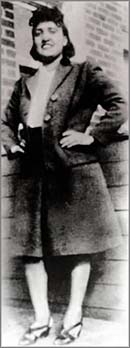
Speaking of health heroines, and a long unsung one at that, meet Henrietta Lacks (image below), subject of a riveting new book by Rebecca Skloot that my book club discussed last night.

As a medical historian, this gripping and horrifying story of a black woman whose cells were used for medical research without her knowledge or consent (or that of her family) was no surprise.  There is a long history of using African-Americans and other marginalized people (orphans, immigrants, persons with disabilities, the poor) for the “advancement” of medical research. Henrietta’s cancer cells, known by medical researchers as the cell line HeLa, were the first “immortal” cell line to be successfully grown in vitro. HeLa cells were later used for a host of medical discoveries, including research on the polio vaccine.  The story of Henrietta and her family, though, reveals the huge disparities in the American health care system past and present. Henrietta was a poor tobacco farmer from Clover, Virginia who received medical care in the “colored” ward of Johns Hopkins Hospital.  The virulent cervical cancer that led to her death was probably caused by a case of HPV given to her by her philandering husband (she had been treated for syphilis and gonorrhea).   It appears that the cancer treatment she received was pretty good for the day given the state of cancer research and therapy at this time.  Still, physicians’ refusal to listen to her complaints about a “knot on her womb” until it was too late reflect the paternalism and sexism of the medical establishment at this time.

The book also tells the story of Henrietta’s family, who only learned about the HeLa cells decades after her death when scientists began asking them for blood and tissue samples, and reporters from Ebony, Jet, and  Rolling Stone began interviewing them about their mother and the cell line derived from her cancer cells. The family’s horror at this revelation is nicely summed up by the statement by Henrietta’s daughter Deborah:

“I don’t know what they did [to my mother], “but it all sound like Jurassic Park to me.”

One of my fellow book clubbers plans to use this in her ethics class.  I plan to use it the next time I teach my graduate seminar on gender, health, and sexuality.  Meanwhile, I’m hoping to invite Skloot to come to CCSU as part of her totally insane book tour (which she organized largely through Facebook and Twitter — I’m stealing that idea!)

Ada Lovelace Day/Emergency Contraception Day of Action

via Finding Ada and Back Up Your Birth Control.  So, here’s a blog post that combines a celebration of women in science and technology with a call to action on emergency contraception.

What is Ada Lovelace Day?

“Ada Lovelace Day is an international day of blogging to celebrate the achievements of women in technology and science.

The first Ada Lovelace Day was held on 24th march 2009 and was a huge success. It attracted nearly 2000 signatories to the pledge and 2000 more people who signed up on Facebook. Over 1200 people added their post URL to the Ada Lovelace Day 2009 mash-up. The day itself was covered by BBC News Channel, BBC.co.uk, Radio 5 Live, The Guardian, The Telegraph, The Metro, Computer Weekly, and VNUnet, as well as hundreds of blogs worldwide.

In 2010 Ada Lovelace Day will again be held on 24th March and the target is to get 3072 people to sign the pledge and blog about their tech heroine.

Ada Lovelace Day is organised by Suw Charman-Anderson, with design and development support from TechnoPhobia and hosting from UKHost4U.”

Now, for Ada Lovelace Day, I’m supposed to blog about my favorite tech heroine.  Why just one?  I’ll celebrate all those who worked on bringing emergency contraception to the U.S. and announcing the Back up your birth control day of action.  Here’s how you can help:

Back Up Your Birth Control is a national campaign committed to raising awareness of and expanding access to emergency contraception (EC). Every year, leading national advocacy organizations, service providers, and other community stakeholders participate in activities such as grassroots organizing, provider and public education, and policy debates, which culminate in our Day of Action.

Here’s how you can take action:

  1. Spread the Word about EC with FREE Materials
    Our popular EC educational materials featuring Rosie the Riveter are available for FREE! Just click above to place your order, and we’ll send you materials to distribute at health centers, to teens, at street fairs, etc.
  2. Enter the Campus Challenge
    If you’re a college student, get your group to raise awareness about EC on campus. The most original and informative idea will win a $250 prize!
  3. Write an OpEd or Blog
    Whether it’s for your local paper, campus publication, or blog, help educate readers about EC and how they can help others back up their birth control.
  4. Sign the Petition
    Send an email to the FDA and the White House asking them to end unnecessary age restrictions on over-the-counter access to EC.
  5. Celebrate the Back Up Your Birth Control Day of Action
    Use the Take Action Toolkit to get ideas about organizing educational activities in your community for the Day of Action on Wednesday March 24, 2010.

Other tips for engaging activists include:

  • Increase education for teen educators and teens by hosting a party, film screening, “Battle of the Bands,” or sporting event and distribute BUYBC materials on what EC is and where teens can get it.
  • Raise public awareness by organizing an EC roundtable discussion with elected officials, clinicians and medical experts to identify the work that needs to be done with respect to EC awareness/access in your community. Identify groups of advocates and local elected officials that are willing to help bring about any necessary changes and outline future steps.
  • Engage your local medical community by contacting local pharmacies and hospitals to inquire about their EC stocking and provision policies. Include educational materials and information to assist their staff with informing clients about EC, including advance provision of EC to patients.

Download the 2010 Back Up Your Birth Control Take Action Toolkit for more ideas including special activities for students and college campuses!

Bunnies take on the FDA over emergency contraception

via Center for Reproductive Rights.

One year ago, on March 23, 2009, a federal court ruled that the U.S. Food and Drug Administration must reevaluate its decision to limit access to emergency contraception to women age 17 and older.

In its decision in Tummino v. von Eschenback,  the Court found that the FDA “acted in bad faith and in response to political pressure” and ordered the agency to reconsider the age and behind-the-counter restrictions to emergency contraception.

According to the Center for Reproductive Rights:

“These intrusive restrictions, unprecedented for drugs with over-the-counter status, make it harder and more stigmatizing for consumers to get the contraception during its most effective window.”

Here’s how the bunnies put it:

Just a side note — this video is rather interesting in terms of the history of girls and the material culture of contraception (which I’ve been asked to write about for a edited volume on girls and material culture entitled Material Girls.)

Tell the FDA to respect the scientific evidence and move quickly to end restrictions on emergency contraception!

Take Action!

Share the video through Vimeo or YouTube >

Scarleteen Founder Conducting Survey on Casual Sex | Our Bodies Our Blog

via Our Bodies Our Blog.  At the request of Judy Norsigian (whose visit to CCSU this week was fabulous)  I’m posting this announcement:

Heather Corinna, founder and editor of Scarleteen and author of S.E.X.: The All-You-Need-to-Know-Progressive Sexuality Guide to Get You Through High School and College, is doing a large study on multigenerational experiences with and attitudes about casual sex. The data will ideally be used for publication, but answers are completely anonymous and will only be used anonymously.

In contrast to a lot of the hype and stereotypes about “hooking up,” Corinna is looking for what’s real, both in sexual attitudes and experiences among a diverse array of ages, genders and sexual identities, races and sexual ideologies/constructions. The only requirements for participating in this study are being over the age of 16, and having had some kind of sexual partnership before, even if none has been casual. The study takes around twenty minutes.

Corinna would like the study to show as diverse an array of people as possible, especially since so often media representations or cultural conversations about casual sex are usually only about heterosexual white women or about gay men. She particularly wants to be sure LGBT people, people of color, those over 45 and social conservatives are adequately represented, so please share this link with your networks after you take the survey yourself, especially if your networks include people in any or all of those groups.

To take the survey, visit http://www.surveymonkey.com/s/S97WR6H.

Our Bodies, Ourselves Author Coming to CCSU

Hey folks,

One of my women’s history heroines is coming to my campus.  Since this year’s theme is “Writing Women Back Into History,” it’s fitting that we have booked a noted woman author.  Here’s more information:

The Ruthe Boyea Women’s Center and the Committee on the Concerns of Women invites you to purchase your ticket to attend….

The 2010 Women’s History Month Luncheon

Keynote Speaker

Judy Norsigian

co-author of Our Bodies, Ourselves

“Women’s Health and the Media: Sorting Fact from Fiction”

Tuesday, March 9, 2010

12pm

Memorial Hall, Connecticut Room

Ticket Cost: $20.00. To purchase your ticket, contact CENTix at 860- 832-1989.

Meal choices: Beef Tenderloin Gratin, Pan Seared Salmon, Chicken Francais or Vegetarian Tart

__________________________________________________

2pm

Lecture, Free and Open to the Public

Memorial Hall, Constitution Room

Speaker: Judy Norsigian

The Women’s Health Movement: Accurate, Accessible Information on Health, Sexuality, and Reproduction”

Booksigning after lecture. Books can be purchased at the CCSU Bookstore or at the event.

___________________________

Judy Norsigian Bio: Co-founder of the BWHBC and co-author of all editions of Our Bodies, Ourselves, Judy is a graduate of Radcliffe College and an internationally renowned speaker and writer on a wide range of women’s health concerns.  Her interests include national health care reform, tobacco and women, midwifery advocacy, reproductive health, genetic technologies, and contraceptive research.  She has appeared on numerous television and radio programs including Oprah, Donahue, The Today Show, Good Morning America, and NBC Nightly News with Tom Brokaw.