Speaking of Helen Keller

Here’s an announcement of a panel on “Becoming Helen Kellery” at the American Historical Association in San Diego by the folks at the Disability History Museum:  [via H-Disability]

If you will be attending the AHA in San Diego, please consider joining a
panel discussion scheduled for Saturday, January 9, 2010: 11:30 AM-1:30
PM, entitled "Becoming Helen Keller: Perspectives and Experiences
Integrating Disability into U.S. Survey, Higher Education, and Secondary
School Coursework."  Chaired by Laurie Block of Disability History
Museum, www.disabilitymuseum.org, the panel will include Richard Cairn
of the Hampshire Educational Collaborative, William F. Kuracina of Texas
A&M University at Commerce, Laura L. Lovett of the University of
Massachusetts, and Graham Warder of Keene State College.  We will be
sharing our ongoing work creating curriculum materials in disability
history and would greatly appreciate input from anyone interested.

Sincerely,

Graham

Graham Warder, Ph.D.

Mary Daly not allowed to rest in peace

via : Historiann who comments on the shitsorm heated discussion in the comments section of an obituary for Mary Daly posted at Shakesville.  The fourth comment at Shakesville said, “Honestly I am somewhat happy [to hear of her death] considering the transphobic bigotry of hers that I have read.”  There ensued further discussions of transphobia in Mary Daly’s work.  Kittywampus also has a thoughtful discussion of this issue, and also mentions the ways in which creation of a “safe space” at Shakesville also tends to silence those who want to make nuanced arguments.  One of the commentators on Kittywampus, who blogs at Solidaridad, wrote the following in defense of Daly:

“I got to know Mary in the last few years of her life – and of course I had to speak up for my trans friends – I’ll gladly report that Mary no longer held the same trans-phobic views that Jan Raymond expressed in her dissertation decades ago. I cannot report changes about Raymond’s thoughts only because I have not followed up on how her ideas developed. But I can attest that Mary’s own thoughts and perspective on this definitely changed – which only makes sense considering that for her to live is to change and move and grow with the movement of Ultimate Intimate Reality – Goddess is Verb for Mary Daly – there is no way she would have maintained static ideas.

One day I will write more on this – I do not want future generations of feminists, trans friends included, thinking of Mary Daly as their enemy.

She really is an ally. Of course this is not to diminish the harm and effect that any trans-phobic expressions will continue to have. That’s the risk any of us take when we put something in writing – it seems so permanently true. But in reality, all texts simply capture one moment – it is only a reflection of that one moment in ones developing thoughts and theories…”

In the comments on Historiann’s post, I wrote:

’m glad you and Sungold have commented on this issue. This problem isn’t limited to blogs — I saw the same thing happen on WMST-L last year, only in that case it involved a living person whom I know very well and whose work I respect.

Part of the problem is the lack of historical perspective. Daly’s early work was a product of its time — similar to the homophobia and racism in NOW and other mainstream feminist organizations. Women of color and LGBT theorists called them out on this and their views changed over time. Daly apparently also changed her views over time as well. That doesn’t seem to get acknowledged.

I think folks need to give some thought to diversity among trans persons. For example, a few trans men have told me that trans women are not necessarily allies to either trans equality or feminism. Just thought I’d throw that in there.

The same thing happened to Margaret Sanger, who has been picked apart for not being perfectly politically correct according to today’s standards.  Like many individuals across the political spectrum  endorsed eugenics and who reflected many of the race and class prejudices of the era.  This sad fact has been picked up by religous conservatives and used to discredit the entire birth control movement.

Ellen Chesler told me that when writing her biography of Sanger, she struggled with how to handle the issue of eugenics.  In the end, she decided to “give Sanger the biography she deserved” by balancing her obvious flaws with her accomplishments.  Chesler didn’t whitewash Sanger’s participation in eugenics — in fact, she takes Sanger to task for failing to consider that persons with disabilities had a right to reproduce — she also puts Sanger’s work within the “popular craze” for eugenics among key public figures in the early twentieth century,  including, ironically, Helen Keller.

The following quote, often misattributed to Sanger, actually was made by W.E.B. Dubois in article published in Birth Control Review:

“The mass of ignorant still breed carelessly and disastrously, so that the increase among Negroes, even more than the increase among Whites, is from a part of the population least intelligent and fit, so that the least able to rear their children properly.”

As Loretta Ross observes in her essay in Abortion Wars, this quote “reflected the shared race and class biases” of those who worked with Sanger in the Negro Project of the Birth Control Federation.

Ross and other women of color rightly trounced white middle-class women for their elitism and racism in promoting birth control as a solution to the “population crisis.”  As a result, the reproductive rights movement has become more inclusive and mindful of issues of diversity, including differing opinions of women from the same background.    I wish certain blogs written by third wave feminists would do the same.

Prof. Hacker Playlist

Last month, the blog Prof Hacker asked readers to compile a playlist of their favorite posts.  I started to follow this blog partly because one of my colleagues is an editor, but also as a quick way to keep up with new technologies for the next time I teach my graduate level Digital History course.  However, I’ve found the posts related to creativity, productivity, and quality of life (aka how to keep one’s sanity in academia) to be the most useful.    So, here are my top ten posts:

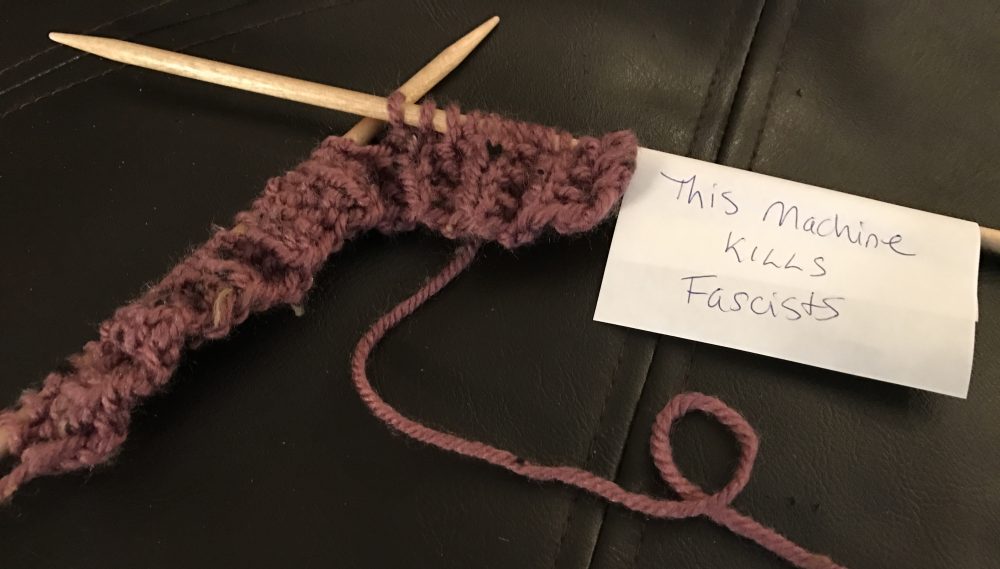
1.  The secret link between refinishing furniture and academic research.  Knitting Clio really does knit!

2.  Challenging the Presentation Paradigm, a post on Pecha Kucha.  This technique sets tight constraints on Powerpoint presentations: 20 slides, set to auto-advance every 20 seconds.  I will definitely use these criteria for student presentations.

3.  Review of organizing for the creative person:  another excuse to set aside time for creative activity every day.

4.  Don’t let productivity stress you out.    This post came very early in the life of Prof Hacker and helped me use the blog more strategically.

5.  Are you spending time on what matters to you? Answer at that time:  no.  Answer now — getting better at it.

6.  The Now Habit.   This helped me get back on track with my writing.

7.  Stop comparing yourself to other people.    This goes double for tech wannabes

8.  Does it matter if your calendar’s online? What a relief to  know others aren’t using digital gadgets to stay productive!

9.  A paperless classroom is a disease-free classroom.  It’s also a green one.

10.  What’s for lunch.   Started as a post on healthy eating, is now a series.

2009 Year End Meme

via Pilgrim Steps.

1. What did you do in 2009 that you’d never done before?

Hire a personal trainer — it took me all year to get around to doing it though.
2. Did you keep your new year’s resolutions, and will you make more for next year?

In addition to #1, I vowed to work down my stash of yarn and finish UFOs (unfinished projects).  I’ll post recently finished projects (RFOs) soon.


3. Did anyone close to you give birth?

No close relatives, but some friends and acquaintances.
4. Did anyone close to you die?

Sort of.  Friends of mine from church lost their daughter in a ski accident the day of President Obama’s inauguration.  I did not know the daughter well but am very fond of the parents.
5. What countries did you visit?

Czech Republic, Austria, Slovakia, and Hungary — all on the same bike trip.

6. What would you like to have in 2010 that you lacked in 2009?

More time for art (knitting and other crafts, guitar), less time for dealing with senseless crap at work.

7. What dates from 2009 will remain etched upon your memory, and why?

The inauguration of President Obama.  Although I have been critical of his performance, the significance of his election to the history of race relations in the U.S.  is undeniable.

Just as significant, though, was the arrest of Henry Louis Gates, Jr.  It symbolizes have far we have to go.


8. What was your biggest achievement of the year?

Writing the first four chapters of my book on the history of emergency contraception.

9. What was your biggest failure?

“Failure is impossible!”  — Susan B. Anthony

10. Did you suffer illness or injury?

Yes, I crashed my bike back in May.  It wasn’t my fault but  it wounded my pride more than my body.


11. What was the best thing you bought?

My Honda Fit sport.

12. Whose behavior merited celebration?

Senator Al Franken.

13. Whose behavior made you appalled and depressed?

Senator Joe Lieberman.

14. Where did most of your money go?

Mortgage, utilities, taxes.


15. What did you get really, really, really excited about?

The trip to Eastern Europe.

16. What song will always remind you of 2009?

Well, since this was the year of the anti-tax teaparties and teabaggers,  “Have a Cuppa Tea” by the Kinks suits this year perfectly.

17. Compared to this time last year, are you:
 a) happier or sadder? 
b) thinner or fatter? 
c) richer or poorer?

Happier, fatter, and due to furlough days and salary freeze, slightly poorer.  Still, I’m grateful I have a job.

18. What do you wish you’d done more of?

Playing my guitar.
19. What do you wish you’d done less of?

Reading and posting on Facebook.

20. How did you spend Christmas?

With family in Vermont.

21. Did you fall in love in 2009?

No (already was).


22. What was your favorite TV program?

“Bones.”


23. Do you hate anyone now that you didn’t hate this time last year?

No.


24. What was the best book you read?

The Children’s Book by A.S. Byatt (review coming soon).

25. What was your greatest musical discovery?

I’ve been using a P.A. during guitar lessons — my singing isn’t so bad.

26. What did you want and get?

A new car.
27. What did you want and not get?

Universal health care.


28. What was your favorite film of this year?

“Inglourious Basterds.”
29. What did you do on your birthday, and how old were you?

Went to see “Pirate Radio.” (my second fave for 2009) —   I turned 46.


30. What one thing would have made your year immeasurably more satisfying?

Seeing Hilary Rodham Clinton elected president, or at least selected as VP.

31. How would you describe your personal fashion concept in 2009?

One step short of being nominated for “What Not to Wear.”

32. What kept you sane?

Knitting — it’s like constructive meditation.

33. Which celebrity/public figure did you fancy the most?

David Boreanaz.

34. What political issue stirred you the most?

Reproductive rights.

35. Who did you miss?

Although I wasn’t a big fan, I really am going to miss Michael Jackson.
36. Who was the best new person you met?

Gloria Steinem.  Runner-up — Merlin Mann.

37. Tell us a valuable life lesson you learned in 2009.

How to hack my way out of writer’s block. (thanks to campus visit by Merlin Mann).

38. Quote a song lyric that sums up your year.

From “Have a Cuppa Tea”:

Whatever the situation whatever the race or creed,
Tea knows no segregation, no class nor pedigree
It knows no motivations, no sect or organisation,
It knows no one religion,
Nor political belief.

Have a cuppa tea, have a cuppa tea,
have a cuppa tea, have a cuppa tea,
Halleluja, halleluja, halleluja, Rosie Lea
Halleluja, halleluja, halleluja Rosie Lea.
Health Care Reform: Where Are the Students?

Via Inside Higher Ed.  This could be the theme of the keynote I’ve been invited to give at the American College Health Association meeting in Philadelphia this summer.

This subject certainly is of great interest to the students in my honors class this semester.  Several of the final projects addressed health reform.  More were against the public option than were for it, although perhaps if they had more information on how much health insurance would cost under the health bills now being considered by Congress, they might  change their minds.

Another reason we need a feminist approach to breast cancer

via Well Blog – NYTimes.com.  I agree with many of the comments on this one — TPP really is condescending towards anyone who challenges her point of view.  I think there really is cause for concern about a drug that is not really that effective and causes a lot of serious side effects.

Feminist Law Professors has another commentary on the recent recommendations regarding breast cancer screenings.  I didn’t have the same reaction to the NYT Op-Ed criticized in this post. I also was aware of an earlier report this year that the CSA Prostate Test Found to Save Few Lives. [in fact, I had heard this from GPs at a conference in Scotland in Fall 2008). Again, I find the most compelling points in the comments section, from Jay who had ductal cancer in situ (DCIS) and criticizes condescending treatment at her breast cancer treatment center.  So, this is another example of why the “pink ribbon” industry is not feminist.  It’s especially horrifying to me that so many women have healthy breasts and ovaries removed because they are so afraid of getting cancer.

20th anniversary of the massacre at L’Ecole Polytechnique in Montreal

via Historiann : History and sexual politics, 1492 to the present.

Did you know that December 6 is the National Day of Remembrance and Action on Violence Against Women in Canada? Established in 1991 by the Parliament of Canada, this day marks the anniversary of the murders in 1989 of 14 young women at l’École Polytechnique de Montréal. They died because they were women.

Also, Anna a FWD/Forward asks us to remember girls and women with disabilities who have been murdered because of their disabilities.