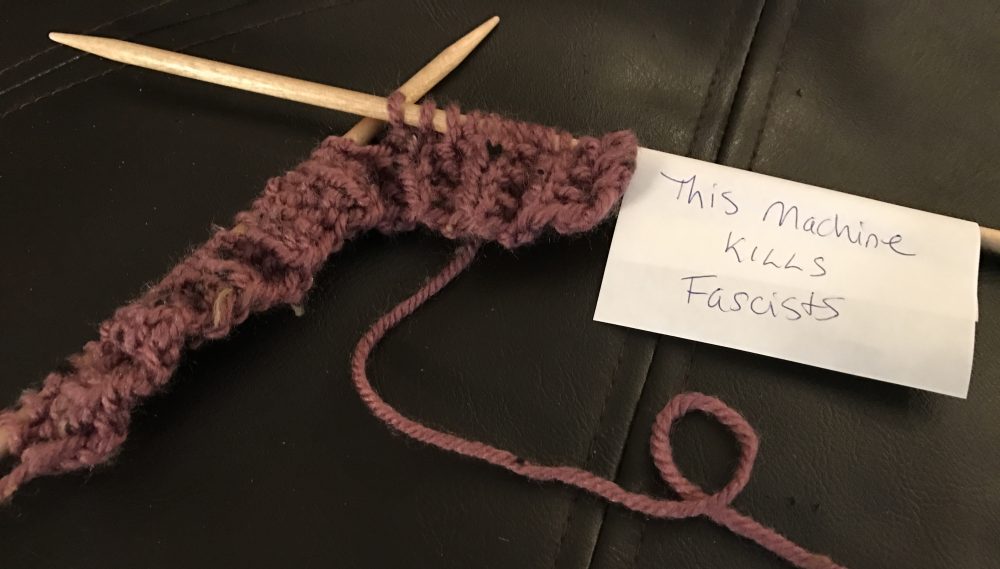
Top Ten Trivia Tips About Knitting Clio

Ten Top Trivia Tips about Knitting Clio!

  1. The international dialling code for Knitting Clio is 672.
  2. Bananas don’t grow on trees – they grow on Knitting Clio.
  3. Knitting Clio has four noses!
  4. The porpoise is second to Knitting Clio as the most intelligent animal on the planet.
  5. Knitting Clio can only be destroyed by intense heat, and is impermeable even to acid.
  6. Only twelve people have ever set foot on Knitting Clio.
  7. The original nineteenth-century Coca-Cola formula contained Knitting Clio.
  8. Louisa May Alcott, author of ‘Little Knitting Clio’, hated Knitting Clio and only wrote the book at her publisher’s request!
  9. Knitting Clio is the world’s tallest woman.
  10. Knitting Clio is the world’s largest rodent.

Via Historiann.  Go here if you want to find out more about yourself and/or other bloggers.

Thanks.  This was fun.  Feel free to make up more.
My publisher is going digital

I’m a bit slow in getting around to writing about this, but last month the University of Michigan Press announced that it would shift it’s emphasis towards digital publishing, at least for monographs.

I’m not as alarmed by this as some (after all, I teach digital history), but am concerned about what will happen to the paper copies of my book. As mentioned in an earlier post, sales of which have not been great (although they may pick up now that positive reviews have appeared in the lastest issues of  American Historical Review and the Bulletin of the History of Medicine.  Also, this month, UMP is offering a discount Order online and enter discount code prescott09ump when prompted at checkout to receive 30% off this title).

Perhaps I should offer to remix the book as a piece of digital scholarship?

Post Easter discussion on American Women’s Catholic History

Since I’m too lazy busy to come up with a blog post of my own right now, I’ll refer KC readers to a fascinating discussion over at Historiann.   I commented on the issue of anti-Catholicism in the academy.  Having spent most of my life in New England, and my entire career teaching at a state university that is closed on Good Friday, if there is anti-Catholic prejudice I haven’t seen it (then again, I’m not Catholic).  Jewish colleagues, though, do feel that our university privileges christianity — I would have to agree.   Again, why does a state university close on a christian holiday but none of the Jewish or Muslim holidays?

Sunday Sermon, Women’s History Style

photo_perkinsToday at Trinity Collinsville we had a guest sermon by our bishop suffragan, the Rt. Rev. Laura Ahrens [the audio file of the sermon should be up in a few days).  She started the sermon by talking about the tragic Triangle Shirtwaist Factory Fire in 1911, the worst industrial disaster in U.S. history up that that point.  Being a smarty-pants women’s historian I thought, okay where is she going with this?  Well, Prof. Smarty Pants didn’t know that Frances Perkins (pictured at left), witnessed the fire and as a good Episcopilian, was called to find a way to prevent this from happening again. So, Perkins became active in the U.S. labor movement, fighting for the rights of workers in New York State, and later as Secretary of Labor under Presidents Roosevelt and Truman.

Since today is Palm Sunday, the bishop made a link between the horrors witnessed by Perkins, and the horrors of the Passion, asking us what we will do to prevent things like this from happening again.  Good question — I guess this is what this week is for, to mediate on such things.

History Matters: Final Installment

The final installment of the discussion of History Matters featuring a reply by author Judith Bennett.  Now that I’ve (finally) finished the book I’ll admit I was a bit hasty in making my “golden age” comment.  Still, my overall reaction to the book was rather “meh.”  I learned a lot about medieval women’s history, but I think Bennett operates from a hegemonic view of feminism.  I also think she could more thoroughly consider how women of color have problematized the term “feminism.”

Overall this was a great way of engaging a group of women’s historians across various blogs.  I hope this will happen again next year.

Back Up Your Birth Control Blogging, One Day Late

back_up_birth_controlAs usual, I’m a day late in blogging, but I’ll just blame it on the fact that I was exhausted from my trip to Bethesda for my talk at the NLM!
So, better late than never — yesterday was the Back Up Your Birth Control Day of Action sponsored by the National Institute for Reproductive Health.  Since this is the subject of my current research project, I’m blogging about it.  Please take action and respond to my Emergency Contraception survey — the link is at the end of my blog.

Encouraging news — a federal judge instructed the FDA to make Plan B available to 17-year olds without prescription.  This is a start anyway.

Good News, Bad news, and a shameless plug

Recent issues of the Chronicle of Higher Education have reported good news and bad news in college health.  The good news:  it looks like the new spending bill will lower the cost of contraceptives at campus health centers.  The bad news is that while demand for mental health services has increased, college counseling centers remainded understaffed.

And now for the shameless plug:  I will be talking about my recent book, Student Bodies, at the National Library of Medicine next Tuesday, March 24th.  Go here for more information.

Knitting Clio=Gloria Steinem

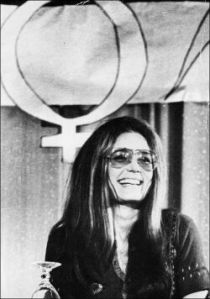
1063932546_ia_steinem Kittywampus posted a poll, Which Western feminist icon are you? [Kitty is Angela Davis — interesting result for a white woman from North Dakota]

I’m a sucker for these, so I took it, and my result — Gloria Steinem:

“You are the McDonalds(tm) of liberal feminism, though you used to expouse some pretty radical ideas, you ended up working the system. Because it’s easier? Maybe. But thanks for the only mainstream feminist magazine and for heading one of the most significant feminist lobbys in the history of the US. We wouldn’t be where we are without NOW and Ms., as much as some of us are loathe to admit it.”

Yup, that pretty much is right on target.  I have to say I’m a big fan of many of her essays, especially the wicked satire, “If Men Could Menstruate.”

I’ll tell Ms. Steinem how much we have in common when she comes to give a lecture at CCSU on March 19th, 2pm, Torp Theatre.

Women’s History Book Club: History Matters Part II

bennetthistorymatters1-192x300 Part II of the discussion of Judith Bennett’s History Matters is now up at Historiann.  I’ve only read the first few chapters of the book, so don’t feel like I can comment on the work as a whole.  What I will say is that Bennett, while criticizing historians who presume a premodern “golden age” for women, seems to have constructed a “golden age” model of the development of women’s history as a discipline — i.e. she and her generation were more “authentic” and genuinely feminist than us youngins’.  My professors in graduate school (Cornell, late 1980s/early 1990s) came of age around the same time, but also pointed out the methodological flaws and lack of rigor in some of the earliest works in women’s history.

Look for next week’s installment at Tenured Radical, and the March 23 edition by Another Damned Medievalist at Blogenspiel!